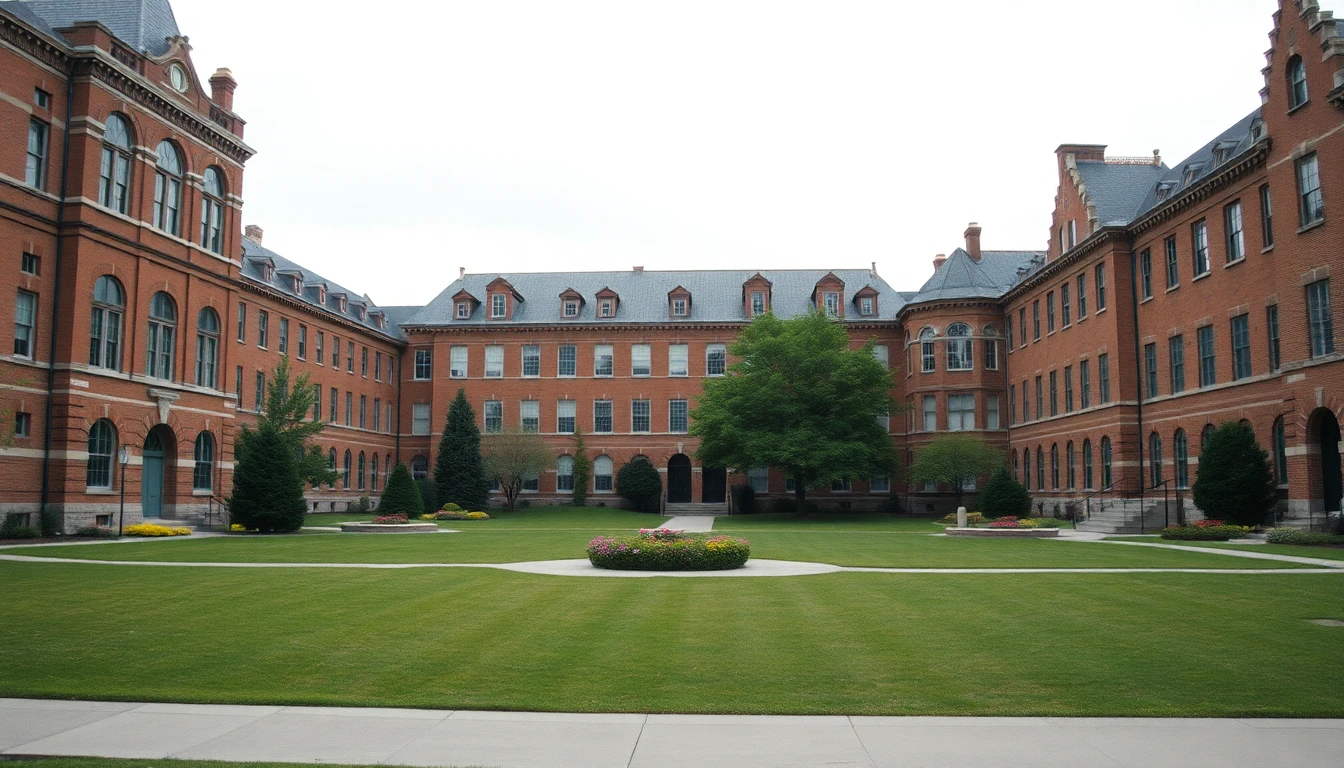
Bishop’s University: Admission, Tuition & Programs [2026]
Written by Muhammad Adnan Raza, Subject Matter Expert.
Table of Contents

Bishop’s University is an English-language university in Lennoxville (Sherbrooke, Quebec, Canada) that offers a traditional liberal arts undergraduate experience with strong advising and a close-knit campus community. If you’re comparing schools, planning costs, or worried about eligibility, this guide breaks down what you need to know for 2026—clearly and realistically.
—
Bishop’s University: what is it and what is it known for in Quebec?
Bishop’s University is a student-centred English-language university in Lennoxville, Sherbrooke, Quebec. It’s known for Liberal arts education, accessible advising, and a tight campus community where students actually connect. If you want a classic undergraduate feel and personal support, it often stands out.
What “Université Bishop’s” means (French name) and where Lennoxville is
You’ll see the name Université Bishop’s in French contexts, but it refers to the same institution. Bishop’s University sits in Lennoxville, a borough within the larger Sherbrooke, Quebec area.
Why it matters for you:
- You’ll experience Quebec, Canada day-to-day culture even though the university is English-language university.
- Your courses, student services, and everyday campus life are still shaped by the broader Sherbrooke region.
Quick snapshot: Gaiters athletics, student-centred support, and campus community
Campus life is often described as close-knit, and that’s not just fluff. You’ll likely notice:
- Frequent student-staff interaction (help feels “near”).
- A traditional undergraduate rhythm (more campus community energy).
- Athletics culture, including the Gaiters.
If you’re the type of student who doesn’t want to disappear in a large system, Bishop’s University tends to feel more personal. If you want a huge-city, commuter-heavy experience, you might prefer larger universities.
—
What is the Bishop’s University acceptance rate for applicants?
Bishop’s University acceptance rate is useful for planning, but it’s not a guarantee. Admission decisions depend heavily on the program, your grades in required subjects, and whether you meet admission requirements like English language proficiency for your intake. Treat acceptance rate as context, not destiny.
How acceptance rate differs by program and intake (and why averages mislead)
An overall acceptance rate can hide real differences:
- Some programs and faculties are more competitive or have tighter prerequisites.
- International vs. domestic intakes can involve different eligibility pathways.
- Transfer, mature-student, and first-year applicants can be assessed differently.
So if a guide says “X% accepted,” that number might not reflect your program-specific odds. It’s more accurate to think in terms of “Do I meet the requirements and prerequisites clearly?”
How to strengthen your application: transcripts, prerequisites, and eligibility checks
Your biggest wins usually come from doing three things well:
- Match prerequisites early
Don’t wait until submission to verify what your high school program (or prior college courses) covers.
- Ensure English language eligibility
If you’re required to demonstrate English language proficiency, plan your test timing and document readiness early.
- Submit complete and accurate documents
Missing details or unclear transcripts can slow reviews, even if your grades are strong.
Warning: Don’t “optimize” your application by submitting less. Admissions offices penalize incomplete files because it creates eligibility uncertainty.
—
What are Bishop’s University programs and faculties, and which should you choose?
Bishop’s University programs and faculties fit a liberal arts model where you can build academic depth while exploring career directions. The best decision comes from matching your interests to program prerequisites and the advising support you’ll actually use—not from picking what sounds impressive.
Programs and faculties overview: popular pathways and common prerequisites
Bishop’s University’s structure supports liberal arts pathways alongside defined degree options. Your exact list will depend on the year and your campus plan, but common selection factors tend to be:
- Your comfort with essay-based coursework and broad academic inquiry.
- Required prerequisites for specific majors (courses you must have already taken).
- Whether you need to align math/science or humanities background.
How to review program prerequisites by major before you apply
Before you start filling the application portal, build a quick prerequisites checklist:
- Identify your top 3–5 majors.
- For each major, list:
- Required courses (e.g., specific math or English courses)
- Any minimum grades
- Any additional admission requirements (especially for structured programs)
- Compare what you’ve already completed vs. what you’re missing.
This prevents a common failure pattern: students apply with strong grades but wrong or incomplete prerequisites.
—
How much does Bishop’s University tuition cost, and what scholarships can reduce it?
Bishop’s University tuition and scholarships determine your actual net cost, not just the sticker price. You need to budget for tuition fees and realistic living/study expenses. Then verify scholarships and bursaries early, because scholarship eligibility often hinges on deadlines and documentation.
Tuition fees vs. total expenses: what to estimate for budgeting
Tuition fees are only one piece. Your total cost usually includes:
- Housing and meals (on-campus vs. off-campus)
- Transportation around Sherbrooke
- Course-related costs (textbooks, software, lab fees if applicable)
- Personal expenses
What to do:
- Start with tuition estimates for your residency category.
- Add a conservative monthly living estimate.
- Include a buffer for one-time costs (setup, deposits, printing).
Warning: If you budget only tuition fees, you’ll often run short mid-year. Many students underestimate move-in and term start costs.
Scholarships and bursaries: how to verify scholarship eligibility and deadlines
Scholarships and bursaries can reduce net cost, but only if you understand:
- Scholarship eligibility rules (academic merit vs. need-based)
- Deadlines inside the application process
- Whether you need extra forms beyond your general application
Checklist before you submit anything:
- Read the scholarship page and note eligibility requirements.
- Confirm whether you must submit additional documentation.
- Record deadlines and keep them synced with your application timeline.
—
What are Bishop’s University admissions requirements, and what documents do you need?
Bishop’s University admissions requirements typically include transcripts, prerequisite coursework, and eligibility for an English-language university. Your job is to submit a complete file through the application portal before the application deadline, with documents that clearly show your academic readiness.
Admission requirements checklist: transcripts, prerequisites, and personal statement (if relevant)
Your exact documents depend on whether you’re applying as a first-year, transfer, or other intake type, but a typical application packet includes:
- Transcripts (official or submitted as required for review)
- Evidence of completing required program prerequisites
- Proof of English language proficiency if required for your situation
- A personal statement only if your program/instructions request it
- Any additional program-specific documents
When letters of recommendation and official documents are requested
Some programs request letters of recommendation, while others focus on grades and transcripts only. Also, some schools want official documents at different steps.
A practical readiness timeline:
- Early stage: you may submit documents in the portal for review.
- Later stage: you may be asked to request an official transcript or provide official copies for final review.
- English requirement stage: you’ll submit or upload submit test scores if applicable.
Warning: Don’t wait until the last week to figure out whether you need official versions. Transcript requests can take time and may require follow-ups.
—
What is the Bishop’s University application deadline and timeline to apply?
Bishop’s University deadlines aren’t just dates—they’re a timeline that affects transcript processing, documentation readiness, and eligibility checks. If you plan backward from the application deadline, you’ll avoid last-minute transcript delays and reduce stress.
Timeline planner: when to submit transcripts and documents
Use this planning logic to protect your application:
- Start document gathering early
Identify what you need: transcripts, prerequisite evidence, and any test scores.
- Request transcripts sooner than you think
Many applicants forget that schools take time to issue documents. Build time into your schedule for follow-ups.
- Submit in the application portal when everything is ready
You can’t control every delay, but you can control your own “file readiness.”
Suggested sequencing (adjust based on your situation):
- 6–10 weeks before deadline: start request an official transcript process
- 4–6 weeks before: confirm English language proficiency pathway and test timing if needed
- 2–3 weeks before: finalize your document uploads and application status tracking
After you apply: track application status in the portal and prepare for next steps
Once you submit, don’t “set and forget.”
- Track application status in the application portal regularly.
- Watch for requests to submit transcripts in a different format or provide additional materials.
- Prepare for possible calls/emails from admissions or program staff.
—
How does Bishop’s University campus life and O-Week work for new students?
Bishop’s University campus life and O-Week help students settle into Sherbrooke, Quebec fast. Expect orientation activities, community-building, and chances to explore clubs and athletics—including Gaiters events—while meeting student supports that can help you succeed academically and socially.
O-Week schedule basics: what typically happens during orientation week
O-Week commonly includes:
- Welcome sessions and campus tours
- Housing and student services orientation
- Social events to meet classmates
- Program/faculty information sessions
- Activities designed to reduce the “new school” stress
It’s a big transition week. Students who show up actively usually feel more connected sooner.
Explore campus life: clubs, community, and where students study
When you’re not in class, you’ll likely rotate through:
- Study spaces across campus (and likely the Bishop’s University library)
- Club meetings and informal student gatherings
- Athletics-related events (including the Gaiters)
If you want to be social but also need quiet study time, ask current students where they study and how busy times affect their routine.
—
What library resources does Bishop’s University offer students?
The Bishop’s University library supports coursework and research with study spaces and academic help. Knowing what’s available helps you plan assignments earlier, especially during exams and project weeks when people scramble for sources and writing support.
Where to study on campus and how research support helps you write stronger papers
Library value usually shows up in three ways:
- Quiet spaces when you need deep focus
- Help finding credible sources
- Guidance on academic writing and research structure
Practical impact:
- You’ll spend less time hunting for sources.
- You can improve citations and argument structure faster.
How students typically use library resources for assignments and research
Most students use library support in a predictable cycle:
- Early research: find sources and get a topic narrowed
- Writing support: refine outlines and develop arguments
- Final checks: citations, formatting, and proofreading
If you’re worried about research skills, start earlier. Writing improves when you draft sooner.
—
What does Bishop’s University ranking look like, and how should you interpret it?
Bishop’s University ranking varies by source because bishop’s university ranking methodology differs across publications. Use rankings as a signal, not a prophecy. Validate fit using program specifics, teaching style, student-centred support, and real student reviews.
Ranking interpretation: what each methodology tends to emphasize
Different ranking systems often emphasize different things:
- Research output (sometimes less relevant for liberal arts teaching focus)
- Student-to-staff ratios
- Reputation surveys
- Employment or outcomes metrics
If the ranking you read is heavily research-weighted, it can undervalue a school’s teaching strengths. Bishop’s is known for liberal arts education, so “research-centric” rankings can feel mismatched.
Warning: Don’t chase rankings so hard that you ignore fit. If the program and teaching style don’t match you, higher ranking won’t fix day-to-day motivation.
How to cross-check rankings with student reviews and program outcomes signals
Do this instead of trusting one number:
- Check student reviews for teaching quality and advising.
- Look for commentary about academic support and campus services.
- Compare what you want (liberal arts, advising, study environment) to what students report.
Then validate program-specific outcomes:
- Graduate pathways
- Internship/co-op opportunities (if relevant)
- Department advising quality
—
What are Bishop’s University admission requirements for international students?
Admission requirements for international students typically include documentation for academics and English language proficiency, plus immigration planning like a study permit. Your goal is to sequence tasks correctly after you receive your offer letter, so you don’t get stuck at the visa stage.
English language proficiency expectations and what to submit (transcripts and test scores if applicable)
If you’re applying from outside Canada and your background requires it, you may need to show English language proficiency. Expect:
- Proof through submit test scores if required
- Transcripts that show language of instruction when needed
- Verification through the admission requirements for international students section on the program/university page
Study authorization basics: study permit planning and Canadian student visa terms
After you receive your offer letter, you usually need:
- Documents to support a study permit application
- A plan aligned with Canadian student visa terms
- Proof of finances and enrollment-related documents
This stage is where timing matters most. Many students discover missing paperwork too late. Start preparing early, even if you don’t submit immediately.
Warning: Immigration processing delays can happen. Plan your study start date carefully and keep backups ready.
—
Should you apply to Bishop’s University—how do you decide?
The EduRanked Bishop’s University Decision Framework helps you decide with less guesswork. Use the criteria in order and prioritize fit, realistic cost, and eligibility readiness. If you don’t match the model (liberal arts teaching, English-language campus life), then it might not be the right school for you.
Apply using a checklist: verify admission requirements and scholarship eligibility
- Fit with programs and liberal arts focus
Are you excited about a liberal arts style education and academic advising?
- Cost reality: tuition fees, scholarships and bursaries
Can you afford the net cost after tuition fees, living costs, and possible financial aid, bursaries, and scholarship eligibility?
- Admissions requirements: transcripts, deadlines, and English proficiency
Can you meet document readiness and English language proficiency requirements on time?
- Student experience: campus life, O-Week, and support services
Does the campus community vibe match how you learn and socialize? Are supports available for your needs?
- Outcomes signals: ranking methodology and student reviews (contextual)
Use Bishop’s University ranking methodology as one signal, then confirm with student reviews and program-specific outcome signals.
Next steps after applying: how to respond if you receive an offer letter
Once you get your offer letter:
- Check deadlines in the offer letter carefully.
- Confirm whether you need to provide any additional documents before final enrollment.
- Plan next steps for immigration (if applicable), including study permit steps and timelines.
—
What happens after you submit your Bishop’s University application?
After you submit your Bishop’s University application, you’ll monitor your application status through the application portal. If accepted, you’ll receive an offer letter with next-step instructions. Your job is to respond quickly to any document requests and plan your enrollment timeline.
Track application status and prepare any additional requested materials
- Log into the application portal and monitor updates.
- If the portal requests changes, follow the steps immediately.
- Keep a record of uploads and confirmations.
Sometimes you’ll need to submit transcripts again or provide additional documentation. This can happen when systems categorize documents differently.
What to do when you receive an offer letter (and how to plan enrollment)
When you receive the offer letter:
- Read the conditions carefully (document finalization, deposits, deadlines).
- Confirm next steps for your start term.
- If you’re an international student, begin planning around the study permit and Canadian student visa sequence.
Warning: Missing a deadline tied to your offer letter can cause delays or loss of admission. Treat offer deadlines like tuition-deposit deadlines.
—
Myth vs Fact: What Most Applicants Get Wrong in 2026
—
The contrarian note: when Bishop’s University might not be the best match
If you want a strictly research-intensive, English-taught STEM-only experience with less emphasis on liberal arts-style breadth, Bishop’s University may feel misaligned. Also, if you’re looking for a giant campus with lots of anonymous convenience, the close-knit community might be a challenge.
Traditional advice to “chase rankings” can mislead here. Prioritize:
- program prerequisites you can meet
- whether you’ll thrive in liberal arts education
- whether student-centred support fits your learning style
—
What Most People Miss: a document readiness timeline (not just deadlines)
Many guides list the application deadline but skip how long documents take to produce and verify. Here’s the part that bites students:
- Official transcripts often take longer than expected.
- Letters of recommendation require time for your recommender to respond.
- English tests need scheduling time—then official score reporting time after you submit test scores.
A simple readiness plan:
- Start request an official transcript earlier than you think.
- Ask recommenders for expected turnaround dates.
- Use portal updates to track application status and fix missing items fast.
Warning: If you submit “almost complete,” you may still be eligible—but review can slow down while your file waits for clarity.
—
Comparison table: how costs and steps typically differ by applicant type
| Category | What usually changes most | What to prepare earlier |
|---|---|---|
| Domestic (Canada/Quebec) applicants | Often simpler document routing; English proof may be different | Transcript readiness and prerequisite confirmation |
| International (outside Canada) applicants | Immigration sequence + English language proficiency | Study permit planning, official score reporting, document timing |
| Scholarship-focused applicants | Eligibility requirements and deadlines | Scholarship documentation + proof of eligibility |
| Transfer students | Credit evaluation and course equivalency | Course descriptions/syllabi if requested |
—
Frequently Asked Questions
What GPA do I need for Bishop’s University?
Your grades matter, but the required threshold depends on your program and the specific admission requirements for that intake. Focus on meeting prerequisites clearly and submitting complete transcripts. If you’re unsure, contact admissions office with your program choice.
Is Bishop’s University strictly an English-language university?
Yes, Bishop’s University operates as an English-language university for instruction. International applicants may still need to show English language proficiency, depending on their education background and intake rules.
How do I submit transcripts through the application portal?
Follow the upload instructions inside the application portal exactly. If documents must be official, follow the steps to submit transcripts or request an official transcript through your school. If the portal flags issues, fix them quickly.
Do I need letters of recommendation?
It depends on the program and admissions route. Some applicants won’t need them. Check your program’s admission requirements checklist inside the application instructions, then confirm with the admissions office if anything is unclear.
When should I request my official transcript?
Request it at least several weeks before the application deadline. Official processing time varies by school, and delays are common. If you can request earlier, do it. It protects your application status and reduces last-minute stress.
What if I’m missing a prerequisite for my major?
Don’t submit blindly. Review program pages for review program prerequisites and check whether you can take an approved course before starting, or whether your intake type has an alternate route. Confirm with admissions office.
How do scholarships and bursaries work?
They reduce your net cost if you meet eligibility and deadlines. Verify scholarship eligibility rules early, and keep your documentation ready. Don’t assume everyone receives the same aid—often, aid depends on your profile and application timing.
Will I get an offer letter right away?
Not always. Review depends on your file completeness and program demand. After submitting, you’ll monitor application status in the portal. If you’re accepted, you’ll receive an offer letter with next steps and deadlines.
—
Summary & Next Verified Step
Bishop’s University is a student-centred English-language university in Lennoxville, Sherbrooke, Quebec with a liberal arts approach and a campus community that tends to feel personal. Your next step is to verify the exact admission requirements for your chosen major in the official application portal, confirm the application deadline, and ensure your document timeline (transcripts, prerequisites, and English language proficiency) is realistic before you submit.