Canadian Mennonite University Admissions Guide 2026
If you’re searching for Canadian Mennonite University information but keep running into mismatched “rankings,” unclear admissions requirements, or incomplete tuition details, this guide organizes what you need for Manitoba, Canada decision-making, rankings context, programs, cost, and next steps. Canadian Mennonite University (CMU) is a private, Christian university in Winnipeg that offers undergraduate and graduate programs, including education pathways, with admissions handled through eligibility and program requirements plus documented deadlines and scholarship criteria for 2026.
11 min read · 2,578 words
Table of Contents
Written by EduRanked Editorial Team, Higher Education Research Editor, 10+ years of experience.
This builds on what we covered in our universit de saint boniface universite admissions guide — reading both gives you the most complete picture.
If this is useful, our University Canada West Admissions & Tuition walkthrough goes a step further.

What’s Canadian Mennonite University (CMU) and who’s it for?
CMU fits students who want Christian higher education in Winnipeg with structured advising and whole-person formation. Your best match depends on the program level, your readiness for eligibility requirements, and whether you want service-learning and clear course planning support.
CMU’s “whole person” focus shows up in the way advising is described, and it influences how the programs talk about mentorship and community learning. In admissions, the practical part is Alignment, so treat your application like proof, not a guess. You’re not just sending grades, you’re showing you understand the program expectations and can follow the course plan with advising support.
What CMU’s mission means in admissions decisions
Because CMU emphasizes whole-person education, the impact goes beyond marketing language. You’ll see it in how programs describe mentorship, community learning rhythm, and anything experiential in the learning design. So gather fit signals from the curriculum and from the way advising supports registration and pacing.
Fit signals to collect before you apply: curriculum language, course-registration advising support, and whether service-learning or related practices appear in the learning rhythm.
How are undergraduate and graduate students organized?
CMU organizes planning by credential level. Don’t assume documentation and requirements look the same across undergraduate programs, education pathways/after-degree routes, and graduate programs. If you’re applying from a different starting point, you’ll want to confirm your pathway early, not after you’ve built your document pack.
Where is CMU located, and what should Manitoba applicants verify?
CMU is located at 500 Shaftesbury Blvd, Winnipeg – Manitoba, Canada. If you live outside Winnipeg, housing timing stops being a “later” task, especially when you need to plan residence decisions early.
CMU also reports 25 average first-year class size and a 18:1 student-to-faculty ratio. Source: Canadian Mennonite University (CMU).

New to this topic? Start with macewan university admissions programs campuses.
Which programs and degree levels does CMU offer, including the Bachelor of Education?
CMU offers undergraduate programs and graduate degree programs, including education-focused pathways. For Manitoba applicants, verify program titles, entry eligibility, and practicum expectations before you commit to total cost.
Rankings might help you find the school, but they don’t tell you whether the curriculum fits your goals. What matters more is whether CMU’s education pathways match your background and how you want to learn. If you’re a career changer looking for education training, the pathway that often lines up is the Bachelor of Education (After-Degree) route.
How do degree levels compare for your academic records?
Undergraduate programs are built for students starting from bachelor-level study. After-degree routes expect you to already have a related credential. Graduate programs require advanced preparation, and they can lean harder on program-specific documents.
What’s special about the Bachelor of Education (After-Degree) route?
CMU frames education training as hands-on, and it includes a practicum expectation: 28 weeks of practicum experience across early, middle, and high school settings. Source: Canadian Mennonite University (CMU).
That practicum expectation changes how you plan your semester calendar. Confirm the scheduling patterns and field experience timing early, because your work schedule and family commitments can easily collide with placement weeks if you only plan “when it happens.”
How should you read curriculum and course registration requirements?
Look past program titles. Check how courses are sequenced and whether prerequisites apply to what you studied before. Advising helps you place yourself correctly, but you still need to understand registration constraints before you assume you can fit everything into one term.
What most people miss: your schedule beats your motivation, verify course-registration prerequisites and any field-placement timing tied to education training.
How does CMU admissions work in Manitoba for 2026?
For 2026, CMU admissions relies on eligibility rules and program-specific documentation. Build a checklist of required materials, confirm selection criteria, and get credit-transfer clarity if you’re applying from college or from abroad.
Admissions goes smoother when your documents are clean and complete, you follow the correct pathway for your credential level, and you reply fast when an advisor asks a follow-up question. If you’re juggling work, family, or travel, that “reply speed” part matters more than it sounds.
What documents do you usually need?
Your documentation should match your education history. Most often that means academic transcripts and proof that you meet the program’s eligibility for the correct credential level. If grading-scale or credit details aren’t clear, you can end up waiting while someone clarifies the gaps.
Warning: If transcripts don’t show grading scales or credit details clearly, expect clarification time. Fix clarity issues before submission rather than during waiting.
What if your grades aren’t “perfect”?
Start with eligibility first, then do what you can to strengthen your file. Complete transcripts, make sure your course history matches what the program expects, and use advising feedback before you lock your plan. You might not be able to rewrite your past grades, but you can remove confusion about fit.
Is there a “selective admission policy,” and how do you evaluate competitiveness?
CMU typically doesn’t rely on a single published acceptance rate. Instead, you evaluate competitiveness by reading the requirements and aligning your academic history to those eligibility expectations. If anything feels unclear, contact admissions directly.
How do transfers and international applications change the process?
Transfer credit policy and international steps can shift what documents you need and how long the timeline takes. Before you submit, confirm credit-evaluation steps, required translations or certifications, and how transfer outcomes affect course registration and scheduling. That one clarification can save you from planning the wrong sequence of courses.
- Identify your exact CMU program title and confirm the correct admissions pathway for your credential level.
- Gather transcripts and any supporting documents; confirm your prior course details match CMU’s expectations.
- Submit via CMU’s official process and capture confirmation.
- Request advising for credit-transfer feasibility and course-plan impact.
- Respond quickly to document requests during peak processing.
What are CMU tuition fees, and what other costs should you budget?
CMU tuition depends on program and degree level. Your real budget must include housing, course materials, and daily living. Use CMU’s official tuition and financial-aid pages, then build a total-cost plan before choosing between education-focused and graduate study options.
Tuition alone won’t tell you affordability for Manitoba planning, especially if you’ll live on campus. You still need to budget course supplies and daily living costs, even when tuition looks manageable at first glance.
How do you compare total cost (tuition + living + learning)?
Start with a tuition range approach, then expand it into a total-cost matrix. For 2026 planning, pay attention to housing because CMU states Free shared dormitory housing to every first-year undergraduate student, starting Fall 2026. Source: Canadian Mennonite University (CMU).
| CMU student budget category | Tuition | Housing | Course materials | Total estimate (use official figures) |
|---|---|---|---|---|
| Undergraduate | Check CMU tuition by program/level | Verify Fall 2026 housing eligibility | Budget required learning items | Add your official tuition + living + materials |
| After-Degree Ed (Bachelor of Education route) | Confirm tuition for your after-degree plan | Choose campus housing vs off-campus | Plan for program-specific materials | Build a term-by-term total-cost budget |
| Graduate degree programs | Confirm graduate tuition by program | Choose housing approach early | Set aside learning and administrative fees | Compare against your funding plan |
What financial aid options exist, and which deadlines matter for 2026?
CMU scholarships depend on when your application and transcript get received. CMU lists that Applications/transcripts received by February 28 (fall entry) or November 30 (winter entry) receive scholarships as described. Source: CMU Scholarships (Canadian Mennonite University).
CMU also lists application timing conditions: November 30 for Winter semester and May 31 for Fall semester. Source: CMU Scholarships (Canadian Mennonite University).
Practical scheduling move: Treat November 30 and May 31 as hard deadlines for scholarship readiness, then work backward to complete transcripts and any credit-evaluation steps.
What scholarship examples show up on CMU’s scholarship page?
Examples include a $1,000 entrance scholarship for eligible Mennonite high school graduates from Canada or the USA, and Academic Merit Awards with a maximum value of $6,000 (up to $2,000 per year for up to three years). Source: CMU Scholarships (Canadian Mennonite University).
Music-related examples include $500 per year for CSMA individual applied lessons/private instrument instruction (up to $2,000 per student) and $250 per year CSMA study scholarship (up to $1,000). Source: CMU Scholarships (Canadian Mennonite University).
Leadership scholarships: CMU states it offers Two Leadership Scholarships with a maximum value of $20,000 (up to $5,000 per year for up to four years). Source: CMU Scholarships (Canadian Mennonite University).
What other costs surprise students in Winnipeg?
Housing and course materials often hit first, then daily living expenses stack up. If you commute, don’t forget transportation time and costs. And if you’re starting first-year undergraduate in Fall 2026, re-check shared dorm eligibility before you sign anything.

Weighing your options? Compare them in university alberta admission tuition programs.
How should you interpret CMU ranking claims and compare options?
Rankings can give rough context, but the better decision comes from comparing program curriculum, student support, service-learning structure, and total affordability. Use rankings as a starting point only, then confirm fit with CMU’s official admissions and advising details.
Rankings can be a shortcut, and I get why you’d want one. Still, conventional wisdom that “rankings determine quality” misses the practical part, which is how the program works with your schedule, your background, and your career plan. If CMU’s curriculum, advising approach, and total cost don’t match your reality, the ranking won’t fix that.
Which ranking sources matter, and which don’t?
Different lists use different metrics, so CMU can look different across sources. Your strongest decision info still comes from CMU’s official admissions requirements, curriculum details, and student support, not a single ranking table. If you check QS or THE results, treat them as loose context, not the decision.
Which proof points should you put first if rankings don’t decide it?
Focus on what reduces friction. That means advising structure, course registration support, and service-learning opportunities. For education pathways, also put first practicum expectations and scheduling impact.
Don’t ignore housing and residence planning either, because that can move your total cost a lot.
Which option fits your goals and budget? (Use this comparison table)
| Comparison lens | CMU (Canadian Mennonite University) | Other Winnipeg/Manitoba options you’re considering |
|---|---|---|
| Program alignment | Verify programs match your credential level (undergrad, after-degree, graduate) | Confirm degree level and education pathway availability for your timeline |
| Tuition/total-cost transparency | Use official scholarships and housing notes for a tuition + living + materials view | Use official tuition schedules and housing/residence policies |
| Student support services | Use advising to plan course registration and confirm eligibility | Ask what advising covers and how credit transfers work |
| Learning model fit | Service-learning/community mentoring expectations | Experiential components and curriculum structure |
| Location impact | Winnipeg planning, commuting needs, and housing access | Local support services and commute/residence realities |
If you want a quick decision framework after reading ranking pages:
- Fit: curriculum and service-learning structure match your goals
- Evidence: official admissions requirements and course-registration clarity
- Affordability: plan total cost, not just tuition
- Support: advising and services address the friction points you’ll face
What do most people miss about Canadian Mennonite University? (Myths vs Fact)
Most missteps come from treating CMU like every other university: trusting rankings alone, budgeting tuition without living costs, and assuming admissions follow a one-size-fits-all script. Evaluate official requirements, total cost, and the program’s support and experiential structure.
You’ll see the pattern fast if you’ve tried to plan before, the same way deadlines and requirements start to blur when you’re juggling multiple documents. I’d rather you judge CMU by what you can verify and schedule, since that’s what affects whether your application and your first term actually go smoothly.
Myth vs Fact #1: “Rankings alone tell you if CMU is right for you.”
Myth: if CMU ranks well, you should apply. Fact: rankings don’t capture fit, mentorship, or service-learning design, verify curriculum and student support on official CMU pages.
Myth vs Fact #2: “Tuition fees are the only cost that matters.”
Myth: decide with tuition only. Fact: housing, course materials, and daily living affect affordability. For first-year undergraduate in Fall 2026, verify CMU’s shared dorm statement (Starting Fall 2026) for your eligibility. Source: CMU.
Myth vs Fact #3: “Admissions is one-size-fits-all.”
Myth: the same application strategy fits every credential level. Fact: requirements shift by undergrad vs graduate and can change with transfer or international documentation needs.
Insider move: ask “What does success look like in this program, and what support kicks in if I struggle?” It quickly reveals real fit.
What should you do next to apply or visit CMU in Winnipeg, Manitoba?
Next steps: choose the exact program, prepare the documents CMU lists for your credential level, submit through the official process, and track your status. If you’re near Winnipeg, book advising to confirm course registration and transfer credit details.
Start by locking the program title, then build your document pack around the CMU requirements for your specific credential level. From there, submit through the official process and track your status. If you’re near Winnipeg, a quick advising appointment can clear up course registration and transfer credit details before you waste time on the wrong plan.
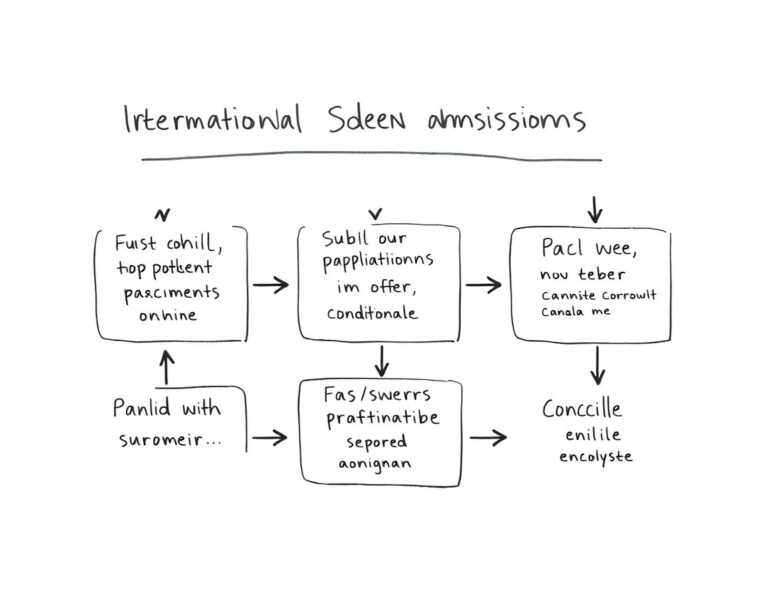
Step-by-step: How to apply for 2026 (document prep → match → submit → track)
- Choose your exact program title and confirm the admissions pathway for your credential level.
- Prepare required documents, including official transcripts and any program-specific forms listed on CMU’s requirements pages.
- Submit using CMU’s official process and save your submission confirmation.
- Track status and respond quickly to document requests or transcript clarification.
- Schedule advising to finalize course registration and confirm credit-transfer feasibility if relevant.
What should you do if you’re near Winnipeg?
Don’t wait for slow back-and-forth. Contact admissions for a program-fit conversation, confirm how course registration works for your program level, and clarify housing/residence expectations so you can plan real dates.
To learn about campus context, review official CMU updates (example): More News Stories (CMU Media).
Ready to move? Confirm the current details on the official cmu.ca page.
Conclusion
If you only take one thing from Canadian Mennonite University: use this page to decide what matters for your situation, then check primary sources for anything that can change. Then take the next concrete step on the official cmu.ca page.
Prices, requirements, and product details shift — confirm the facts that affect your choice, then move.