
NSCAD University Admissions & Programs [2026 Guide]
It’s 11:40 p.m., your portfolio’s half-finished, and three deadline tabs are still open. NSCAD University is Halifax’s art and design university, and this guide breaks down what it offers, how admissions work, what you’ll likely need to budget, and which rankings and deadline pages to check before you apply.
14 min read · 3,116 words
Table of Contents
Written by EduRanked Editorial Team, researched using official institutional pages, government education resources, and recognised ranking/profile publishers.
If you haven’t already, our guide on University of King’s College Admissions covers the foundation that connects directly with what you’ll learn here.
Related reading: Mount Saint Vincent University Programs.
What’s NSCAD University, and is it a college or a university?
NSCAD University is an art and design university in Halifax, Nova Scotia, with a studio-heavy profile that sets it apart from broad comprehensive schools. If you want a creative degree, you’ll care less about the label and more about portfolio review, critique culture, and how the program matches your work.
People ask whether NSCAD is a college or a university because the old name still floats around. It’s the Nova Scotia College of Art and Design, now NSCAD University, and that current name matters because admissions pages, degree pages, and student support all sit under the university brand. If you’re comparing universities in Halifax NS or making a list of universities in Nova Scotia Canada, this is the one built around visual arts programs, media arts degree paths, and interdisciplinary studio courses.
Why read this instead of only the official site? Because the official pages give you pieces, while this guide puts them side by side, flags trade-offs, and shows where applicants usually slip. I’ve seen strong students lose time because they read the program page but skipped the deadline format or funding page.
That part stings, especially when you’re juggling classes, a job, or a studio schedule that never really ends.
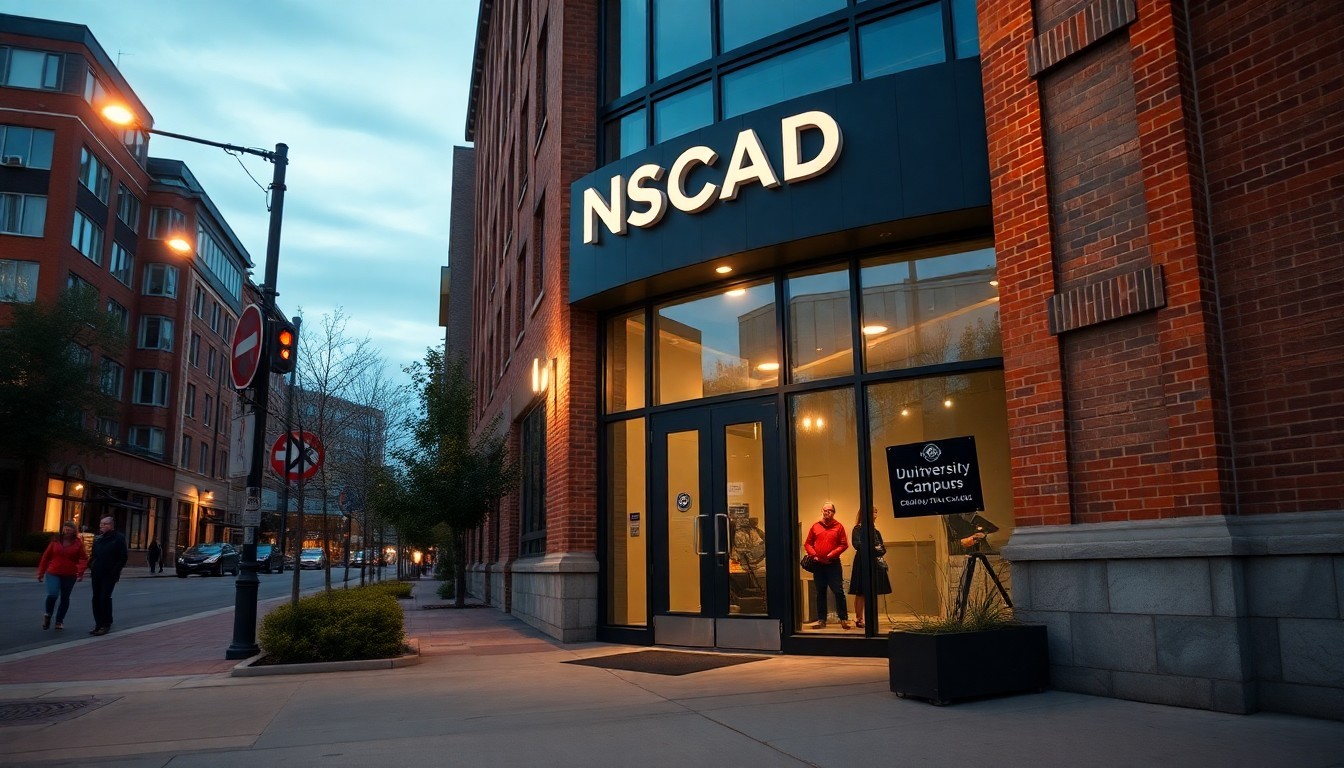
What does NSCAD University stand for?
The initials stand for Nova Scotia College of Art and Design. That older name still appears in history references, but the university now uses NSCAD University on current admissions and program pages.
Where is NSCAD University located in Nova Scotia, Canada?
NSCAD University is located at 5163 Duke Street, Halifax, Nova Scotia, Canada. That address matters if you plan a campus visit, commute, or need to understand how studio access fits your schedule. Halifax also anchors the university’s ties to the wider arts community.
New to this topic? Start with Dalhousie University Admissions Rankings Nova.
What programs and degrees are offered at NSCAD?
NSCAD offers undergraduate and graduate study in art and design, including BFA and MFA pathways, plus broader options tied to liberal arts, social sciences, art history, and theory. The right fit depends on studio intensity, critique culture, and how much independent creative work you want.
NSCAD’s academic mix covers bachelor fine arts study, graduate programs, and coursework in art history, contemporary art theory, and studio practice and critique. You’ll also see paths that touch Fashion, Photography, Design, animation and motion media, graphic design curriculum work, creative technology studies, and art education specialization. The exact menu changes by degree level, so don’t assume one program page tells the whole story.
For a useful compare-and-decide lens, I’d place NSCAD alongside schools like Emily Carr University Art Design and a broader university such as Dalhousie University Admissions Rankings Nova. That comparison helps because art schools and comprehensive universities don’t deliver studio life the same way.
How do undergraduate degrees differ from graduate study?
Undergraduate entry often revolves around BFA program requirements, portfolio review, and evidence that you can handle studio work. Graduate entry, especially an MFA, asks for deeper creative direction, sharper writing, and clear MFA thesis thinking. If you want broad liberal arts social sciences coursework with minimal studio time, read the degree structure carefully before you apply.
What’s an MFA Thesis at NSCAD?
An MFA Thesis usually signals a sustained body of work plus critical reflection. At NSCAD, that means you should expect more than a pretty portfolio. You need a coherent creative direction, and your materials should show how your ideas have developed over time.
| Type | Duration | Cost | Best for | Trade-off |
|---|---|---|---|---|
| Undergraduate BFA | Check the program page | See NSCAD tuition | Students building a studio portfolio and critique habits | Heavy studio commitment and frequent reviews |
| Undergraduate BA-linked study | Check the program page | See NSCAD tuition | Students who want creative work plus broader academic coursework | Less studio intensity than a pure BFA path |
| MFA | Check the graduate page | See NSCAD tuition | Advanced artists ready for thesis-level work | Higher expectations for independence and critique |
How to apply to NSCAD
Apply by matching your degree choice to the correct admissions page, then assemble transcripts, portfolio files, and any written materials before you submit. For undergraduate applicants, portfolio quality matters a lot. For graduate applicants, the CV and thesis-ready fit matter even more.
Admissions at NSCAD University move through a portfolio-focused undergraduate admissions process or a more layered graduate admissions requirements path. That means the job isn’t just “apply.” It’s matching your files to the right credential, then checking delivery rules, English language proficiency, and the exact submission format. Use the official admissions pages first, then fill gaps with the current Apply Now instructions and the admissions requirements page.
The part people skip is simple: format. I’ve seen excellent applicants get tangled because they named files badly, missed a deadline stamp, or treated a portfolio upload like a casual email attachment. That stuff matters.
What are the admission requirements for NSCAD University?
Requirements vary by program level, but you should expect transcripts, portfolio material, and possibly a CV or essay. International student support pages can also point you toward English language proficiency rules. Check the exact program page, because studio-based degrees and graduate study don’t use the same checklist.
Does NSCAD University require a portfolio for admission?
Yes, for studio-based art and design degrees, the portfolio is central. The university uses art and design portfolio review to judge creative direction, process, and readiness for critique. Don’t build for a single “accepted style.” Build for clarity, range, and honest development.
What are the NSCAD University admission requirements for transfer students?
Transfer students still need to meet program-specific admission standards, and they should verify how previous coursework maps to the target degree. Because studio sequences can be strict, transfer credit doesn’t always mean you skip foundational work. Ask for the exact page that shows transfer rules before you assume anything.
- Choose the exact undergraduate or graduate program you want.
- Download the current admissions requirements and note every file type.
- Build your portfolio around process, revision, and finished work.
- Gather transcripts, your Curriculum Vitae, and any written statements.
- Check the deadline, file format, and English language rules before you submit.
What’s NSCAD tuition and fees?
Tuition and fees depend on your student category and degree, so the safest move is to verify the current NSCAD tuition page before you budget. For many applicants, the real cost also includes Halifax housing, supplies, and studio materials, not just the posted fee line.
For a hard number that helps with planning, NSCAD says the university awards about $100,000 annually to students, with more than 90 internal scholarships and bursaries available per academic year, and about $200,000 per academic year when internal and external funding are combined, according to NSCAD Scholarships and Bursaries. The same page says the current range of individual entrance scholarships is $500 to $6,000, and some awards renew for four years, making the top award about $25,000.
That’s real money, and it changes the decision. If you’re comparing NSCAD University scholarships against other art schools, the funding picture can shift the actual price more than the sticker tuition does.

What scholarships are available at NSCAD University?
NSCAD offers internal scholarships and bursaries, plus support that can connect with outside awards. The university says applying by March 1 automatically considers you for entrance scholarships and bursaries. That date is worth circling early, because funding timelines and admissions timelines don’t always behave the same way.
What are the NSCAD University application deadlines?
For graduate admission, NSCAD lists January 15 as the deadline. For scholarships and bursaries, apply by March 1 if you want automatic consideration. If you’re scanning deadlines fast, use the official admissions pages and the Academic Calendar to confirm current dates.
How much does it cost to attend NSCAD University per year?
Use the official tuition page for the exact annual figure tied to your program and student category. I won’t guess here, because the wrong number does real damage. If you’re budgeting from abroad, pair the tuition page with the study permit information on the Government of Canada’s study in Canada page and the broader immigration hub.
- Open the tuition page and select your student category.
- Check whether your program has extra fees or studio costs.
- Add Halifax housing, food, transit, and supplies to your spreadsheet.
- Subtract confirmed scholarships, bursaries, and outside funding.
- Keep a buffer for materials that your studio course may demand later.
Weighing your options? Compare them in Emily Carr University Art Design.
How does NSCAD rank, and is it a good school?
Rankings can help you compare reputation, but they don’t tell you whether the studio culture fits you. For creative study, I’d trust portfolio fit, resource quality, and critique expectations more than a single ranking number.
People search “is NSCAD a good school” because they want a clean answer. I don’t think that answer exists without context. The better question is whether the school fits your work, your pace, and your willingness to live inside studio critique.
NSCAD’s own history page says the school was founded in 1887, and the university’s current profile sits inside Halifax’s arts culture, which gives it a specific kind of energy.
For rankings context, use a recognized source like Times Higher Education and compare that with the school’s own profile. If you want a broader Nova Scotia comparison, the city and regional context matters just as much as a ranking snapshot. That’s why I’d keep a tab open for Dalhousie University Admissions Rankings Nova and compare institutional types, not just names.
Is NSCAD a good school for art and design?
If you want intensive studio practice, critique, and a city-facing arts scene, NSCAD can be a strong fit. If you want broad lecture-heavy study with minimal making, it may feel narrower than you expect. That’s the honest trade-off, and it’s why I’d check the degree page before the ranking page.
What’s the NSCAD University acceptance rate?
I’m not going to invent a number. If you need that figure, check NSCAD’s official admissions materials or contact admissions at [email protected]. For many creative schools, portfolio review makes a simple public acceptance-rate figure less useful than program-specific requirements.
Is NSCAD part of Dalhousie University?
No. NSCAD University stands on its own as an art and design university in Halifax. People often compare it with Dalhousie because both sit in Nova Scotia, but they serve different academic goals and different student types.
What does NSCAD stand for?
NSCAD stands for Nova Scotia College of Art and Design. The current university name matters on admissions forms, but the old name still helps you read history pages, alumni references, and older external profiles without confusion.
That name shows up because institutions change labels before they change missions. NSCAD kept its art-and-design identity, and the newer wording simply reflects how the school presents itself now. The university’s current website, the NSCAD website, should always win if a page conflicts with an older reference.
Here’s the small but useful point: when you search colleges and universities in Halifax Nova Scotia, you may find older references that still use “college” in the name. Don’t let that distract you. The admissions page is the source that counts.
What most applicants miss about NSCAD
Most applicants spend time on the portfolio’s look, but the hidden risk sits in the checklist: English language timing, exact deadline formats, and program-specific submission rules. That’s where applications break, not usually in the art itself.
I see this over and over. Students obsess over which piece looks strongest, then submit late, miss a required file, or ignore the submission format for their degree level. Most guides say “make a great portfolio.” Fine.
But in practice, the bigger issue is whether your package matches the admissions system you’re sending it through.
And if you’re applying from outside Canada, the Government of Canada’s immigration and study pages belong in your research stack from day one, not after you’ve built the portfolio. That’s true for international students and for domestic applicants who need to coordinate support or timelines around Nova Scotia living costs.
Myth vs fact on NSCAD University admissions
Myth: You only need a perfect GPA to be admitted to NSCAD University.
Fact: For studio-based art and design degrees, admissions decisions heavily rely on your portfolio review and academic or creative fit.
Myth: Online or optional online courses mean you can skip foundational skills and critique.
Fact: Even with online or low-residency delivery, you still need to show readiness for studio practice and critique expectations.
Myth: Your portfolio should look like one accepted style to match NSCAD University.
Fact: A strong portfolio shows ideas, process, and development. One look doesn’t win this game.
Ready to move? Confirm the current details on the official nscad.ca page.
How do you check campus resources and support at NSCAD?
Check studios, galleries, Accessibility Services, and student supports before you apply, because they shape your actual experience far more than a glossy campus page does. If the resources don’t match how you work, the degree will feel harder than it should.
Campus facilities and studios matter a lot here. NSCAD’s creative spaces, including references to Anna Leonowens Gallery Systems and the Anna Leonowens Gallery, tell you the university treats exhibition and critique as part of the learning loop, not a side feature. That matters for fine arts, photography, design, and social sciences-linked theory work.
If you want a visual feel for the school, the gallery site at Visit the Anna Leonowens Gallery helps. And if you care about the student voice, Follow Us On Instagram can show you current activity without pretending to be an admissions source.

Does NSCAD University have residence or student housing options?
Check the official site for current student housing options rather than guessing from a city map. Halifax housing changes fast, and art students need practical space for supplies, commuting, and late studio sessions. The question matters because housing often drives the real cost, not the tuition line.
What support services does NSCAD University offer?
Look for Accessibility Services, Wellness, Equity/Inclusion, and academic advising. Those supports matter during admissions and after enrollment, especially if you need accommodation planning or help balancing studio practice with other obligations. Support pages tell you a lot about how the university actually treats students.
- Open the campus, student services, and gallery pages together.
- Match your major to the facilities it will use most often.
- Check whether Accessibility Services can support your application or study plan.
- Review housing, transit, and gallery access if you’ll study in Halifax.
Frequently Asked Questions
What’s NSCAD University?
NSCAD University is an art and design university in Halifax, Nova Scotia. It focuses on studio-based study, creative practice, and related theory. Check the official admissions page for current degree-specific details.
Is NSCAD a college or university?
It’s NSCAD University now, though older references may still use Nova Scotia College of Art and Design. For admissions and current program information, the university name is the one to trust.
Where is NSCAD University located?
The university is located at 5163 Duke Street, Halifax, Nova Scotia, Canada. That’s the address to use for visits, route planning, and campus-related voice searches.
What does NSCAD University stand for?
NSCAD stands for Nova Scotia College of Art and Design. The institution later adopted the university name, but the initials stayed the same.
Is NSCAD part of Dalhousie University?
No. NSCAD University is its own institution in Nova Scotia. It partners with the arts scene in Halifax, but it doesn’t sit under Dalhousie.
What are the admission requirements for NSCAD University?
Expect transcripts, a portfolio for studio-based programs, and possibly a CV or written material for graduate admission. Check the exact program page because requirements change by degree level.
What scholarships are available at NSCAD University?
NSCAD says it awards about $100,000 annually through internal scholarships and bursaries, and about $200,000 per academic year when external funding is included. Apply by March 1 for automatic scholarship and bursary consideration.
What are the NSCAD University application deadlines?
Graduate admission has a January 15 deadline. Scholarship and bursary consideration is automatic when you apply by March 1. Verify the current academic calendar before you submit.
Does NSCAD University require a portfolio for admission?
Yes, for studio-focused programs the portfolio sits at the center of the decision. Reviewers look for process, development, and fit, not just polished final pieces.
Conclusion
NSCAD University makes the most sense when you compare the degree, the portfolio expectations, and the costs in one place instead of chasing each piece separately. The school’s appeal comes from its studio culture, Halifax setting, and art-and-design focus, but the real test is whether your work fits that environment. That’s where applicants win or stall.
Your next step is simple. Pick the exact program, open the official admissions and tuition pages, and build a checklist around the January 15 graduate deadline or the March 1 scholarship timeline, depending on your path. If you’re comparing options in Nova Scotia, keep Dalhousie University Admissions Rankings Nova open beside the NSCAD pages so you can compare institutional fit, not just brand name.
Related guides
Sources
- Education and training (Government of Canada)
- QS / TopUniversities rankings methodology
- Maclean’s University Rankings
- nscad.ca (official site)
- Universities Colleges — Nscad University (mynsfuture.ca)
- Uni — Nscad University (edurank.org)