Saint Mary’s University Halifax Admissions & Tuition [2026]
Saint Mary’s University is a practical guide topic — here is what it means and how to act on it.
If you’re trying to figure out where Saint Mary’s University fits for you in Halifax, you probably want programs, admissions steps, and real tuition numbers without guesswork. This guide walks you through a practical decision path for 2026, including how to verify your entry requirements and budget using a tuition fees range matrix, plus an international checklist for Halifax applicants.
19 min read · 4,302 words
Table of Contents
Written by EduRanked, with review-informed citations from Saint Mary’s University (SMU) official future-students pages and recognized education references.
Related reading: Cape Breton University Admissions, Tuition &.
Our St Francis Xavier University Admissions — published just before this one — lays the groundwork worth reviewing alongside this article.
What’s Saint Mary’s University in Halifax, Nova Scotia?
SMU is a Halifax university with undergraduate and graduate programs across arts, science, and business. If you’re deciding, confirm the program’s entry requirements and total cost on SMU’s official pages.
SMU is based in Halifax, Nova Scotia, and offers bachelor’s plus graduate programs across major academic areas. And if you’ve been wondering “is this the right fit,” start with the exact program requirements, then check what you’ll pay in total, not just the school name.
Is SMU a good fit for undergraduate and graduate students in Halifax?
Fit depends on how your goals line up with the program structure. For undergraduate admissions, you’ll zoom in on your chosen field, which SMU groups under Our Arts, Our Science, and Our Business, then pay attention to the degree pathway length. For graduate applications, the balance shifts toward the program’s specific entry criteria, documentation, and deadlines.
One pattern I see with applicants is this, they lock onto a single number from a ranking snippet and freeze when the real program page asks for specific details like documents, prior education information, or a timeline. That pause doesn’t have to happen. Verify the requirements for your exact program, because that’s what decides your outcome, not generalized school claims.
Where is Saint Mary’s University located (Robie Street Halifax)?
On institution listings, SMU’s address shows as 923 Robie Street. Most students plan commuting and campus visits with that Robie Street area in mind. If you’re scheduling a campus tour, confirm the official location map linked from SMU’s future-student pages, then estimate travel time like you’d for an interview.
Also, if you’re searching “near me” on your phone, don’t skip verification. Halifax routes and transit time can shift your schedule fast on a visit day.
What division is Saint Mary’s University in (and why do people ask)?
People usually ask about “division” when they’re talking athletics. That answer depends on the league and the sport context. If your question ties to student-athlete pathways or game schedules, use Saint Mary’s Huskies Athletics resources instead of random aggregator pages.
Sports info changes, and checking the current official athletics pages keeps you from acting on outdated details.
And yes, Halifax students do care about campus location and daily flow. Once you confirm what the Robie Street commute actually looks like, the decision usually gets simpler.
New to this topic? Start with St Marys University Calgary Canada.
Which Saint Mary’s University programs and degree levels can you study?
SMU offers multiple degree levels and fields of study. First match your major to the right degree pathway, then confirm your program’s exact admission requirements on the official program page.
Here’s a planning approach that cuts the chaos for Halifax applicants. Start with degree level, confirm the academic pathway options, and then dig into admissions requirements. That order saves real time.
How do SMU’s degree levels work (including 3-year vs 4-year bachelor’s)?
SMU explains degree-level structures in its university admissions and program listings. The key thing you can’t assume is that every field follows the same timeline. The Degree Levels Matrix concept matters because your pathway length and eligibility can vary by program.
So match your target field to the correct degree level before you start documents.
Also, don’t ignore transfer credit logic if you already have prior coursework. Some programs that accept advanced standing can change your real timeline, so you want those admissions requirement details early, not after you’ve already booked your year.
What fields of study are most likely for Halifax applicants (Arts, Science, Business)?
SMU groups academic areas under Our Arts, Our Science, and Our Business. That grouping helps you shortlist, but you still need to verify your exact major or program on the program page. Some fields connect tightly to specific degree formats, and others bring specialized admission requirements into the picture.
If you share your intended major, the program page comes first. Then you can circle back to “what it’s known for,” but that sequence keeps planning grounded.
Do international students need extra steps for program entry?
International applicants usually handle added documentation verification plus proof-of-funds planning. SMU’s International student admissions workflows generally combine standard admissions steps with additional requirements related to study permit readiness. When you plan your timeline, don’t leave verification to the last week, because proof-of-funds timing and document readiness take time.
And if you’re looking at “online and distance learning,” check the program delivery model on the official program pages. Don’t assume every degree option offers the same format.
What admissions requirements and application steps does Saint Mary’s University follow?
SMU uses a straightforward workflow: confirm eligibility, pick the correct program, submit required documents, and track your application status. Skip rumors and focus on meeting each program’s entry requirements and deadlines exactly.
Acceptance-rate searching can become a distraction fast. At most universities, a single acceptance-rate number won’t tell you whether you meet the program’s specific admissions requirements for 2026. Your best move is to run the workflow properly.
What’s the admissions workflow from eligibility checks to submission?
Use SMU’s future-student pages as the source of truth, then follow a clear order. First, confirm your eligibility for the degree level you want. Next, choose the correct program page so you can see the exact document requirements.
After that, submit through the official portal path for your applicant category.
Then track your application status using the email contacts SMU publishes for admissions status questions. That way, you don’t guess when something changes.
What admissions details should you verify early (requirements, transfer credit, deadlines)?
Verify three items up front: the program’s document list, any rules about prior coursework for Transfer credits, and the deadlines tied to your intake year. Transfer credit and recognition policies can shift timelines quickly, so treat them like part of your main plan, not an afterthought.
Next, lock your internal timeline. If you keep documents “for later,” you end up rushing right when proof-of-funds or supporting statements become necessary.
Which international steps matter most (GIC, study permit support, documents)?
International applicants typically deal with extra proof-of-funds readiness, and the International Student GIC Program logic affects your budgeting and timing. You also need documents aligned early enough to match the visa application rhythm, not only SMU deadlines.
If you’re applying from Halifax or anywhere in Nova Scotia, build your checklist around both SMU’s admissions requirements and your study permit planning. That reduces nasty surprises when timelines overlap.
- Confirm your eligibility and choose your degree level (bachelor’s pathway or graduate program) before you gather documents.
- Open the official SMU program page for your exact major and note the document list and any transfer credit guidance.
- Prepare documents in the order SMU requests, then double-check names, dates, and transcripts for consistency.
- Submit your application through the official pathway shown on SMU’s admissions pages, then save your confirmation details.
- Track your application status and use the admissions status email or portal if questions come up.
For deadlines, use SMU’s published important dates and treat them as immovable. For example, the Entrance Awards application opens for the 2027–2028 year on February 15, 2027, and course registration openings for new undergraduates show up in SMU’s admissions important-dates page.
How much does Saint Mary’s University tuition cost, and what other fees should you budget for?
Tuition varies by program and student category. To estimate your annual cost for 2026, use SMU’s tuition fees range matrix, then budget study costs like living, insurance, and books. International applicants also need proof-of-funds timing using GIC guidance.
Cost planning gets messy quickly unless you use a consistent method. Pull tuition from SMU’s tuition fees range matrix, then add living, insurance, and books as separate line items. That way, you’re not “hoping” the numbers add up on the final calculation.
How do you use SMU’s tuition fees range matrix without underestimating?
Start by confirming your category and program type, then read the tuition fees range matrix for the relevant year. For international planning, CAD $23,270 to $27,287 per year is the published tuition range on StudyNovaScotia’s SMU snapshot, attributed to SMU’s context. Still verify with SMU’s official tuition and fees page for the exact program category you want.
Next, don’t tuck living expenses into “misc.” Add living, insurance, and books as their own items in your spreadsheet. You’ll quickly see which assumption is driving your total.
What financial aid options should you check in Halifax (scholarships, bursaries, supports)?
For scholarships and bursaries, don’t apply only when you remember. Make a list and check requirements early. SMU also publishes contacts for Entrance Awards and admissions status questions, which lets you confirm whether you’re on track.
If you’re an international student, check scholarship and bursary guidance that explicitly matches your category. That’s where the details get real.
What are common international cost-planning items (GIC, proof of funds, timeline)?
International cost planning usually hinges on proof-of-funds readiness and timing, not just total tuition. The International Student GIC Program guidance becomes a budgeting tool because it shapes how you structure your proof-of-funds plan. Start early so you don’t scramble when documents and payment timing collide.
Also, course registration timing affects your start-term plans. SMU lists course registration openings in its important dates page, including registration windows tied to new undergraduates.
| Cost input | What to use | Fact to plug in now |
|---|---|---|
| Tuition (international) | Tuition fees range matrix | CAD $23,270 to $27,287/year, per StudyNovaScotia SMU snapshot (StudyNovaScotia SMU snapshot) |
| Entrance Awards timing | Entrance Awards application open date | February 15, 2027, for the 2027–2028 academic year (SMU Important Dates) |
| Course registration context | Registration opening information | SMU’s important dates show registration openings for Fall 2026/Winter 2027 terms and new undergraduates (SMU Important Dates) |

How does Saint Mary’s University rank, and how can you compare it with other Halifax schools?
Rankings can give credibility signals, but they don’t choose a school for you. Compare programs, admission requirements, and your 2026 cost plan, then judge fit based on resources you can actually use.
Rankings can point you toward schools with strong research visibility. They can also tempt you into the wrong decision if you treat a ranking like a personal fit score.
Ranking reality check: what rankings measure vs what students feel?
Ranking services use different signals, and students experience the school through programs, support, and day-to-day learning. For example, SMU shows up on QS Sustainability Ranking 2026 at #1501+, according to QS’s listing (QS/topuniversities). That helps you understand sustainability metrics, but it doesn’t automatically tell you how your classes run or how advising access feels.
And if you care about broader global research visibility, US News lists SMU at #2088 in Best Global Universities (US News). Still, your results come from the program you pick and the resources you use.
What should be in your Halifax comparison checklist (academics, cost, timeline, resources)?
I’d compare in a simple order. First, verify the admission requirements for your exact program. Second, check degree length and pathway fit, including 3-year versus 4-year bachelor pathways where relevant.
Third, look at tuition and your total study budget. Fourth, assess campus facilities and student services that match how you learn.
If you’re comparing several Halifax schools, keep everything in one spreadsheet and pull details from official pages. That avoids mixing up what you remember most clearly from a tour with what actually matches your situation.
EduRanked Saint Decision Framework: I use four criteria in order: (1) Program fit (your major and delivery model), (2) Admission match (requirements and transfer credit rules), (3) Budget truth (tuition fees range matrix plus study costs), and (4) Verification (deadlines and documents you can actually deliver on time).
If ranking content keeps pulling your attention away, that framework brings you back to what you can confirm.
Weighing your options? Compare them in Universit De Saint Boniface Universite.
What campus facilities and student services does Saint Mary’s University provide?
Check facilities and services that affect your day-to-day success: learning resources, academic advising, research or experiential opportunities, accommodation options, and career support. Verify before you commit, then confirm details during your campus tour on Robie Street Halifax.
Campus facilities can sound “soft,” but they matter when you’re juggling classes, assignments, and part-time work. The quicker you verify the resources you’ll actually use, the less stress you’ll carry into your first semester.
Which facilities matter most day-to-day (learning spaces, accommodation options)?
Start with the learning setup. You’ll want library and learning resources, quiet study spaces, and reliable access to course materials and schedules. If you’re planning accommodation, confirm student accommodation options and any meal-plan structure tied to residences.
Once you know where you’ll study and live, planning everything else gets easier, including your weekly commute and your daily routine on Robie Street Halifax.
What support services can improve outcomes (advising, research, career services, internships)?
Academic advising helps keep your program sequence from derailing. Career services can help you connect coursework to internships and early career moves. Research or experiential learning opportunities matter if you want hands-on projects during your degree, not just theory.
When you ask about support, don’t stop at “is there a service.” Ask how students access it, how early you should reach out, and what you should expect in the first meeting.
- Library and learning resources you’ll use weekly
- Academic advising process for course planning
- Internships, experiential learning, and research opportunities
- Student accommodation options and practical move-in questions
So yes, plan your tour like a fact-finding mission, not a vibe check.
What’s happening at Saint Mary’s University (without the noise): events, community, and campus visits?
SMU’s events and news pages show the campus community, lectures, and student activities that reveal culture. If you’re deciding, schedule a tour and bring targeted questions about your program, supports, and student groups like SMUSA.
When you skim events, you miss the point. Events help you measure community fit, not just “what’s on.” The better approach: look for events connected to your academic interests, then ask how that connects back to student services and your actual program experience.
Which student groups help you connect early (SMUSA Society)?
The SMUSA Society gives you a way to plug into student community. That matters if you’re moving to Halifax and you want real connections, not just a list of services. If you’re comparing Halifax options, groups like SMUSA can help show what support looks like outside the classroom.
How do you plan a campus tour or virtual visit (what to ask on Robie Street)?
First, check SMU’s official events and academic dates so you plan your visit when admissions staff and relevant activities are likely to line up. Then book your tour and bring a question script. For SMU’s academic planning context, you can reference the Academic Dates page.
For a concrete example of how “what’s happening” reflects community, SMU lists upcoming event content under its events hub. If you want a specific networking-style example, SMU’s event calendar includes items like Futures in Business Networking Reception & Career Fair.
- Pick two tour dates and choose the one that gives you time for 10 minutes of Q&A with admissions or program staff.
- Ask how course schedules and advising work during your first term, especially if you’re entering with prior credits.
- Ask about access to learning spaces, tutoring or supports, and how students find help when deadlines hit.
- For international students, ask how support connects to study permit planning and proof-of-funds timeline realities.
- Confirm next steps for admissions and funding right after the tour so you don’t lose momentum.
If you want a “where to start” anchor, SMU’s official events hub at Events helps you find what’s on deck.
What do most people get wrong about Saint Mary’s University (myths vs facts for Halifax applicants)?
Most applicants get stuck when they treat one metric or one number as the decision. For SMU, verify your program entry requirements and build a full cost plan using official tuition fees info, plus GIC proof-of-funds logic for international applicants.
There are a few repeated mistakes. I’ll name them, then replace them with the actual verification steps you need.
Myth 1: “Acceptance rate is the key”, what to focus on instead?
Acceptance rate can’t tell you if you meet the program’s entry requirements. Even if you find an acceptance rate figure, it may come from a third-party estimate, not SMU’s program requirements. UniRank lists an acceptance rate range from 60 to 69% for SMU (UniRank), but you still need to treat outcomes as requirement-based, not probability-based.
Instead, verify your program’s document list, your eligibility for your degree level, and the deadlines tied to your intake year.
Myth 2: “Tuition alone tells true cost”, how to budget the rest of your study plan?
Tuition matters, but your total cost includes living, insurance, books, and your proof-of-funds timing for international planning. StudyNovaScotia lists international tuition at CAD $23,270 to $27,287/year (StudyNovaScotia SMU snapshot). That doesn’t cover your full budget.
Use line items. It’s where underestimation shows up most often, especially when you’re also planning accommodation and study materials.
Myth 3: “International admissions are one-size-fits-all”, what to verify (GIC, language, documents)?
International pathways differ by applicant category and by program. Proof-of-funds readiness is one key verification item, and document verification timelines connect directly to study permit planning. SMU’s official international admissions page lays out the workflow, and the International Student GIC Program logic helps you plan your funding timeline.
Don’t build a plan from a generic forum answer. Use the official international admissions steps.
Once you switch from probability to verification, the stress usually drops.
How do you apply to Saint Mary’s University and what should you do next in Halifax, Nova Scotia?
Applying gets easier when you run it like a checklist: pick the right program and degree level, prepare documents, submit through the correct official pathway, then set up funding using scholarships and bursaries, plus loan options if applicable. After you submit, track status and plan your Halifax move with a tour follow-up.
Ready to act? This is the straightforward part. If you do these steps in order, you won’t scramble later.
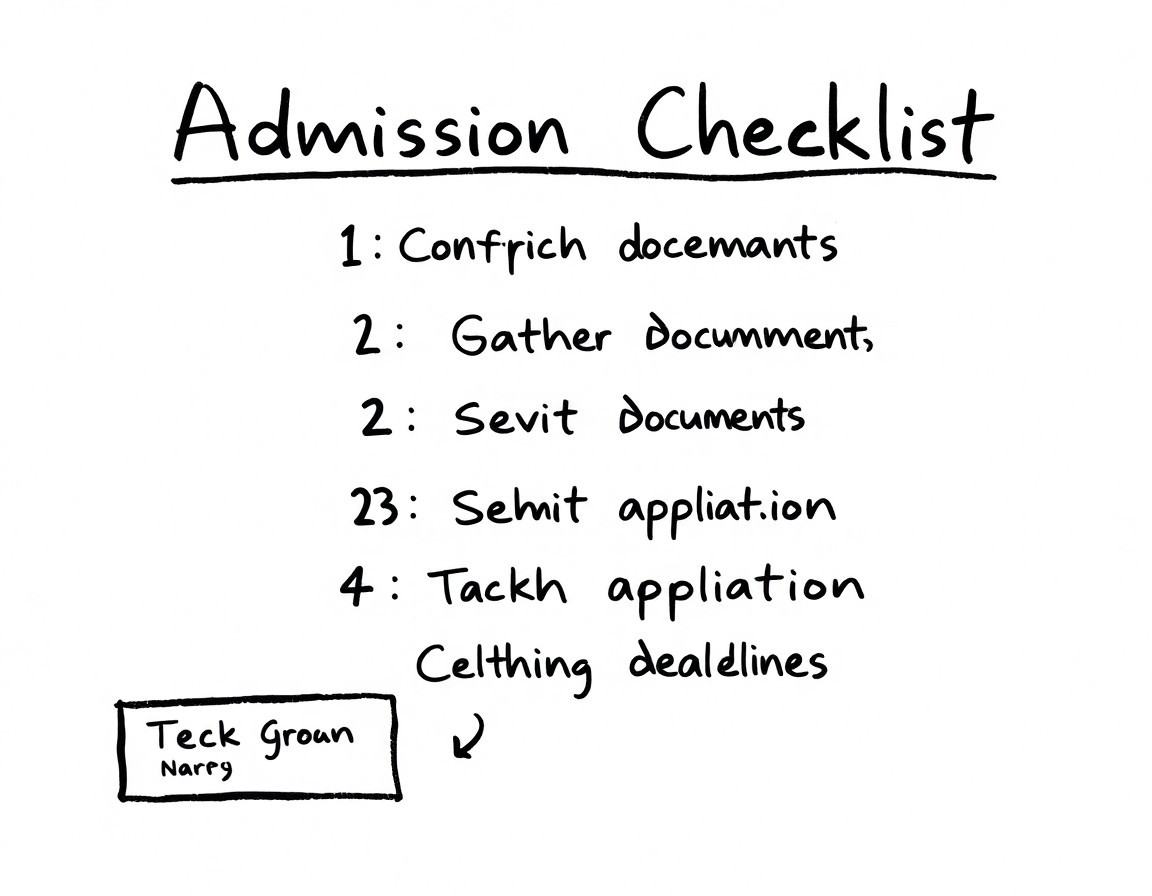
Step-by-step checklist: how to start your application (eligibility, documents, submission)?
Use your target program page as your “single source of truth.” Don’t blend requirements from different programs. It sounds obvious, but it happens quickly when you’re comparing options fast.
- Start with eligibility for your chosen degree level, then confirm your target program page on SMU’s official site.
- Write your document checklist from the program page, including any items tied to prior education or transfer credits.
- Gather documents early and verify details like names, dates, and transcript formatting.
- Submit your application through the pathway SMU lists for your applicant category, then save your confirmation.
- Track your application status and use the admissions status email if anything looks off.
What to prepare for funding: scholarships and bursaries and ApplyBoard loan options?
If you’re budgeting for 2026, plan funding alongside your documents. Scholarships and bursaries can change your total plan, but only if you apply on time and meet every requirement. For loan options, stick to officially supported pathways.
If ApplyBoard is already in your workflow, line up timing with SMU’s admissions steps so you don’t stall funding right when you need to finalize.
You can also grab extra planning help from financial budgeting articles like Universit De Saint Boniface Universite when you’re comparing admissions workflows across schools, but keep your SMU requirements anchored on SMU pages.
What to do next after you submit (track status, plan your move in Halifax)?
After you submit, track your application status and keep your inbox organized. SMU publishes a dedicated admissions-status contact: [email protected] on its admissions office contact page (SMU Admissions Contact). If entrance awards are your focus, use the entrance awards email as listed on that same page.
Then plan your move. Pick a tour date, review course registration context from SMU’s important dates, and set your living arrangements so you don’t end up rushing the week classes begin.
And if you’re stuck on “what’s the deadline,” don’t guess. Check SMU’s important dates page and work backward from the closest deadline you care about.
For a concrete 2026 planning anchor, SMU’s important dates show course registration context for Fall 2026/Winter 2027 terms, and it publishes entrance awards timing for 2027–2028 with an open date of February 15, 2027 (SMU Important Dates).
Ready to move? Confirm the current details on the official smu.ca page.
Frequently Asked Questions
What’s Saint Mary’s University in Halifax?
Saint Mary’s University (SMU) is a university in Halifax, Nova Scotia, offering undergraduate and graduate programs. Use the official program pages and the course catalog to confirm the exact degree options and requirements for 2026.
What’s Saint Mary’s University acceptance rate?
Acceptance rate figures often come from third-party estimates and aren’t a reliable substitute for your program’s entry requirements. Instead, verify your eligibility, meet each document requirement, and plan around SMU’s published deadlines.
What’s Saint Mary’s University known for?
Students commonly associate SMU with academic programs across arts, science, and business, plus student support and campus community. Verify “known for” claims by checking SMU’s program pages and official student services details.
What athletics division is Saint Mary’s University in?
Athletics division depends on the sport and league context, so don’t rely on random summaries. For sport-related questions, check Saint Mary’s Huskies Athletics resources for the current, official information.
Does Saint Mary’s University offer online or distance learning programs?
Some programs may offer flexible formats, but you have to confirm delivery on the specific official program page. Don’t assume every degree option includes online learning. Always verify the delivery model before you apply.
What housing and residence options are available at Saint Mary’s University?
SMU’s residence and accommodation options connect to student move-in planning and meal-plan details. Check the official housing or accommodation pages for current residence options and the rules that apply to your student category.
How do transfer credits work at Saint Mary’s University?
Transfer credit decisions depend on your prior coursework and the program requirements at admission. Start by reviewing the transfer credit guidance on the relevant SMU program page, then ask admissions if you need clarification for your specific background.
What are the deadlines for applying to Saint Mary’s University?
Deadlines depend on the academic year and your applicant category. Use SMU’s important dates page and the relevant admissions timeline for your intake. For example, SMU lists entrance awards open date details for 2027–2028 on February 15, 2027.
What are the admission requirements for Saint Mary’s University?
Admission requirements depend on your chosen degree level and program. Use the official SMU program page for your exact major because that page lists the documents and criteria you must meet for 2026.
How can international students apply to Saint Mary’s University?
International students complete standard admissions steps plus additional document verification and proof-of-funds planning. Review SMU’s international admissions instructions and the International Student GIC Program budgeting logic when you plan your funding timeline.
Conclusion
Saint Mary’s University can work well for Halifax applicants when you make decisions the way universities actually evaluate applications, by program fit, documented eligibility, and deadline-proof planning. Your next step is simple. Pick your exact program page, confirm your degree pathway, then build your 2026 budget using SMU’s tuition fees range matrix plus living and study costs.
If you’re international, plan proof-of-funds timing using International Student GIC Program guidance, then line up your documents early so you don’t scramble around submission.
If you want one reliable starting point, bookmark SMU’s official international admissions workflow at Apply Now, and cross-check the important dates on SMU’s admissions important-dates page. That combination gives you the verification backbone most applicants miss, and it turns “I’m considering SMU” into a real, action-ready plan.
Your next step: visit the official smu.ca page to check or confirm the latest details, then start with the action that fits your situation.
Related guides
- Universit De Saint Boniface Universite
- St Marys University Calgary Canada
- Dalhousie University Admissions Rankings Nova Scotia
Sources
- Education and training (Government of Canada)
- QS / TopUniversities rankings methodology
- Maclean’s University Rankings
- smu.ca (official site)
- QS / TopUniversities rankings methodology
- Maclean’s University Rankings
- CA — Uni (unirank.org)