
University of King’s College Admissions [2026 Guide]
Trying to confirm King’s admission requirements while calculating scholarships, Halifax living costs, and the right Foundation Year path can turn a promising application into a spreadsheet exercise. University of King’s College is a small Halifax, Nova Scotia institution known for interdisciplinary study, journalism, writing, and Foundation Year Program pathways, with undergraduate and graduate options connected to Dalhousie University’s wider academic setting.
13 min read · 2,907 words
Table of Contents
Written by EduRanked Editorial Team, Higher Education Research Editor, 10+ years of experience, with research checked against University of King’s College admissions and financial-aid pages, Dalhousie University student resources, and Maclean’s school information.
Related reading: NSCAD University Admissions & Programs.
If you haven’t already, our guide on Cape Breton University Admissions Tuition covers the foundation that connects directly with what you’ll learn here.
What’s University of King’s College, and how is it different in Halifax?
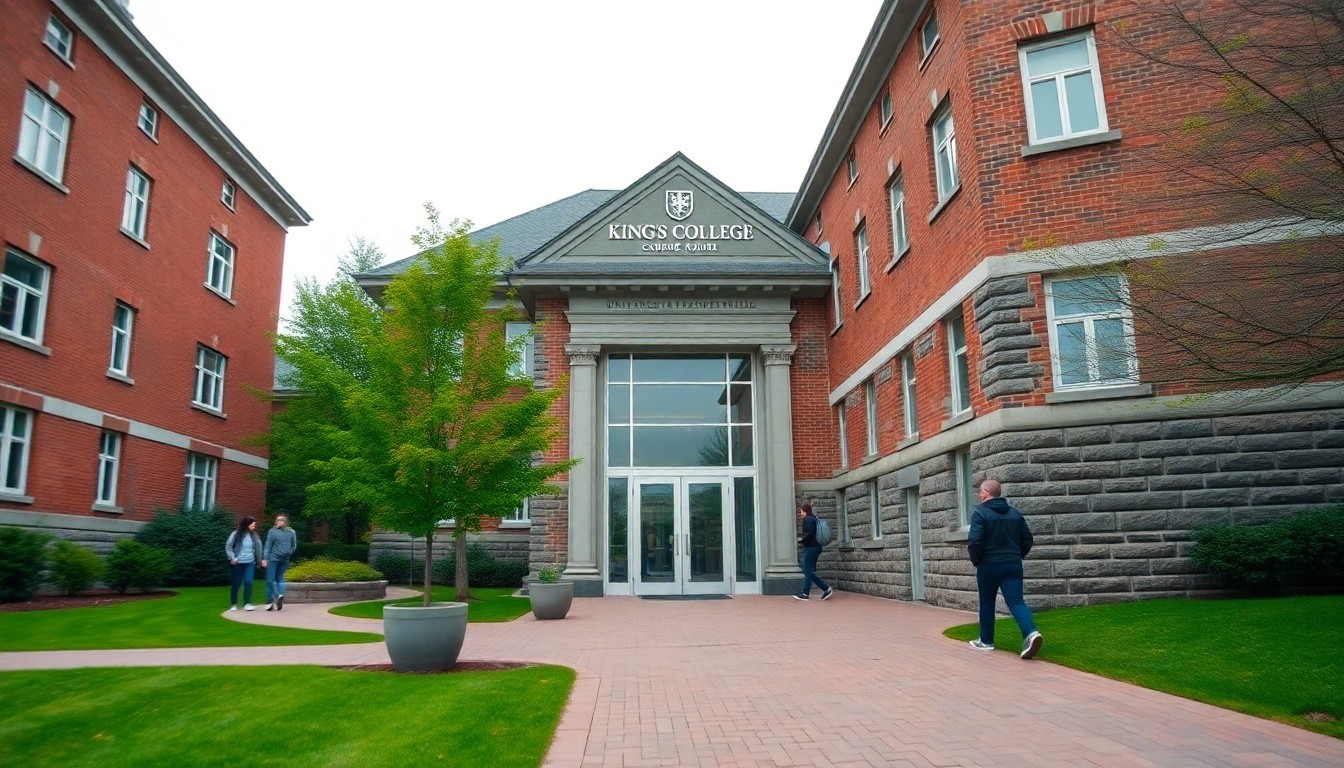
University of King’s College is a separate Halifax university with a structured Foundation Year Program and close academic links to Dalhousie University. Its Coburg Road setting, writing culture, and small-scale learning model suit students who want breadth before choosing a sharper academic direction.
King’s College sits on Coburg Road in Halifax, Nova Scotia. You can verify the location through Open In Google Maps. It isn’t King’s College London in the United Kingdom, and it isn’t a Dalhousie University campus, although students may use shared systems and wider Halifax academic resources.
That distinction affects your application. King’s applicants should follow the institution’s own admissions instructions, while Dalhousie applicants use Dalhousie’s process. For a wider comparison, our Dalhousie University Admissions Rankings Nova covers the neighbouring university separately.
King’s identity rests on interdisciplinary coursework, the Foundation Year Program, journalism, publishing, and humanities study. Academic advising, student support services, library and learning spaces, theatre and music ensembles, athletics, and student teams all shape the wider campus experience. The Library is the practical place to check research and learning support.
Don’t judge the school by one global ranking. QS and Maclean’s measure different things, while a small institution can lose visibility in research-heavy comparisons. The more useful question is whether the pathway matches how you want to learn.
New to this topic? Start with Kingswood University Admissions Tuition Rankings.
How does the Foundation Year Program work at King’s?
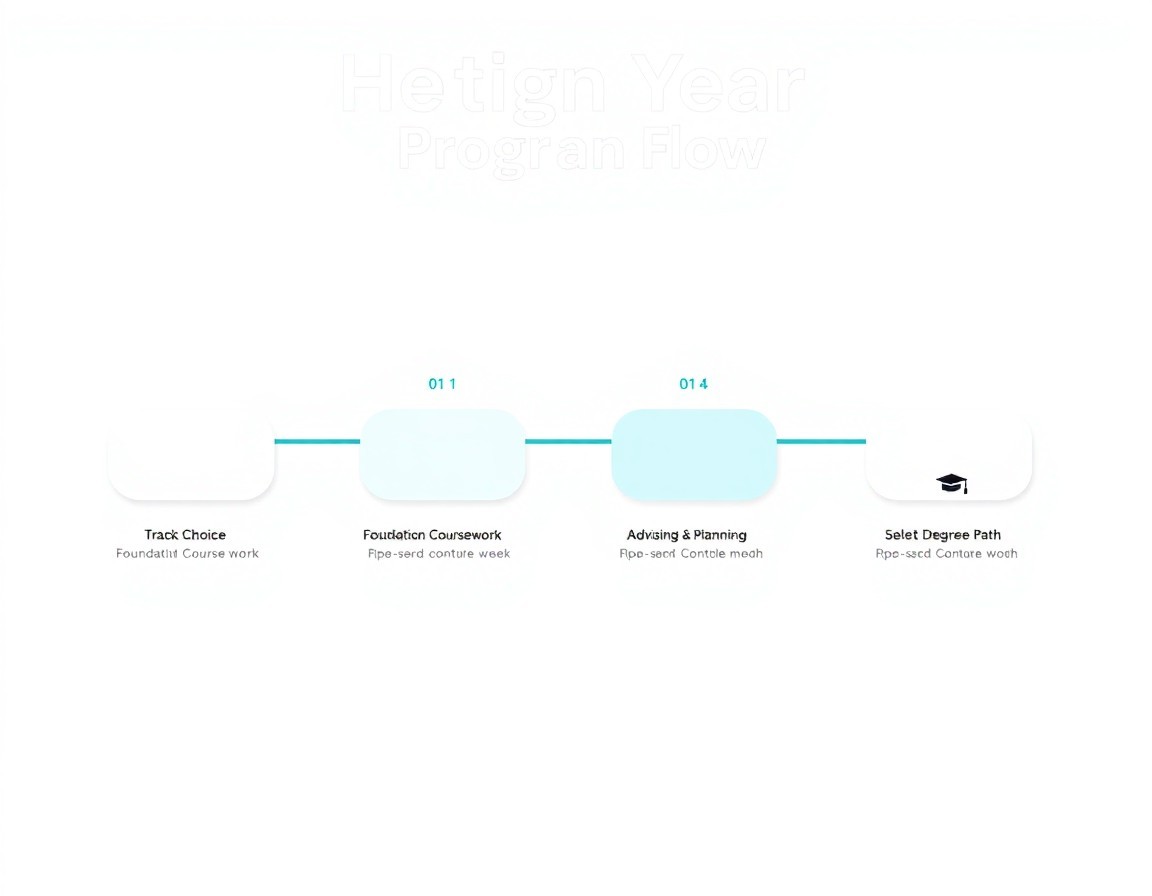
The Foundation Year Program starts students in an Arts, Journalism, Science, or Music track before they specialize. That sequence gives undecided applicants a defined first-year structure instead of demanding a narrow major choice before they understand university-level work.
FYP sits at the centre of many undergraduate pathways. You choose a track, develop research and writing habits, and then move toward a degree that fits your interests. FYP Arts can lead toward a Bachelor of Arts; FYP Journalism toward the Bachelor of Journalism (Honours); FYP Science toward a Bachelor of Science; and FYP Music toward a Bachelor of Music.
That setup works well for students who want direction without committing too early. But it won’t suit everyone. If you already know you need a tightly sequenced professional degree, compare the full calendar before applying.
- Choose the FYP track that matches your strongest academic interest.
- Check the track’s prerequisites and applicant category requirements.
- Complete the foundation year while testing your academic direction.
- Confirm the degree specialization and its remaining course requirements.
- Ask academic advising how the pathway affects your expected completion timeline.
Admission is only the first planning point. FYP isn’t a blank year: your course choices, writing workload, and intended specialization can affect later scheduling, particularly if you’re considering journalism, Honours Programs, or graduate study.
| FYP track | Example specialization | Best fit | Trade-off |
|---|---|---|---|
| FYP Arts | Bachelor of Arts | Students who want humanities breadth | Requires later choices across disciplines |
| FYP Journalism | Bachelor of Journalism (Honours) | Students focused on reporting and writing | Portfolio and workload expectations need checking |
| FYP Science | Bachelor of Science | Students seeking science foundations | Prerequisite planning matters early |
| FYP Music | Bachelor of Music | Students combining music and academic study | Confirm specialization and performance expectations |
Which degrees can you study at King’s?
King’s offers undergraduate routes through Arts, Journalism, Science, and Music, plus one-year journalism and graduate options. Compare each degree’s entry point, length, writing or portfolio expectations, and relationship to FYP before submitting an application.
Undergraduate degree programs include the Bachelor of Arts, Bachelor of Journalism (Honours), Bachelor of Science, and Bachelor of Music. Students can explore areas such as Media Studies, Contemporary Studies, Costume Studies, Creative Writing, Early Modern Studies, European Studies, Women’s Studies, and International Development Studies.
What’s the Bachelor of Arts at King’s?
The BA suits students who want interdisciplinary study across humanities and related fields. FYP Arts provides a broad starting point, while Contemporary Studies, Women’s Studies, and Early Modern Studies can help shape a later focus.
How does journalism study differ?
The Bachelor of Journalism (Honours) gives students a more direct writing and reporting identity. King’s also lists a One-Year Bachelor of Journalism for eligible applicants, described by the institution as a nine-month route from first class to job-ready study. Confirm eligibility before assuming your previous education qualifies.
What graduate programs are available?
Graduate options include the Master of Journalism and Master of Fine Arts degrees in Creative Nonfiction and Fiction. Requirements can include academic preparation, writing samples, references, and a statement of purpose, so check the exact program page instead of relying on an undergraduate checklist.
Students interested in modern history and science, science technology studies, publishing, or interdisciplinary research should read the full program descriptions. The official Undergraduate Admissions page is the right starting point for current requirements.
How should you interpret King’s program rankings?
Rankings provide context, but they don’t capture the full value of King’s small, writing-focused, interdisciplinary model. Compare FYP structure, curriculum, degree outcomes, and cost before letting a ranking position influence an admissions decision.
Search results often mix University of King’s College Halifax with King’s College London. That mistake can send applicants to the wrong tuition table, location, and admission requirements. Check the city and country every time.
Global rankings often reward research scale and publication volume. Canadian school profiles may emphasize reputation, student experience, or program-level signals. Neither approach tells you whether you’ll thrive in a discussion-heavy, writing-intensive environment.
Myth one: “Ranking is the only proof that King’s is good.” Fact: FYP fit, journalism training, academic advising, and writing opportunities may matter more to your daily experience.
Myth two: “A modest ranking means I shouldn’t apply.” Fact: Applicants targeting journalism, Creative Writing, or interdisciplinary study may value structure and fit over a league-table position.
Myth three: “Every King’s College result refers to the same institution.” Fact: King’s College London operates in the United Kingdom, while University of King’s College operates in Halifax, Nova Scotia.
What are the admission requirements for King’s?
Admission requirements vary by program and applicant category. First-year students should check the relevant FYP track, transfer applicants should ask about credit recognition, and international applicants should confirm English language proficiency, documents, and the institution code O19441088976.
University of King’s College admissions requirements for first-year students depend on the chosen route. Review academic prerequisites, transcripts, English Language Proficiency Scores, and any writing or portfolio material connected to journalism or graduate study.
What English language requirements apply?
King’s may assess tests such as TOEFL, TOEFL CBT, IELTS, MELAB, and CAEL. Don’t assume a test is required or waived based on nationality alone. Confirm the current minimum score and exemption rules on the official admissions page.
Does King’s accept transfer credits?
Transfer credit depends on the course, institution, and program rules. Applicants from NAIT, Briercrest College, or another post-secondary institution should send official records and ask admissions to assess credits before building a completion plan.
What’s the acceptance rate and required GPA?
King’s doesn’t provide a verified acceptance-rate or single GPA figure in the supplied official data. Use the program-specific requirements page instead. A competitive admission average can differ from a published minimum, especially across FYP tracks and graduate programs.
International applicants should review visa and funding steps early. Contact admissions at [email protected] or 902-422-1271, and check the official important dates and deadlines page.
The nearest verified deadline in the available data is March 1 for awards requiring an additional application. Where space remains, applications may receive consideration after November 30 or March 15, depending on the relevant intake or program.
Weighing your options? Compare them in Dalhousie University Admissions Rankings Nova.
How much does King’s cost in Halifax?
Tuition depends on program and residency category, but the official international-student page lists $37,992 CAD per year for guaranteed tuition in 2026/27, plus incidental fees and the international health plan fee.
For international undergraduate applicants, the official figure is $37,992 CAD per year for guaranteed tuition in 2026/27, plus incidental fees and the international health plan fee, according to King’s tuition and financial aid information. Another listed 2026-2027 estimate totals $37,298 CAD including required incidental fees and international health coverage. Read each line item before comparing totals.
International students may see an award worth up to $12,000 in tuition waiver for eligible full-time undergraduate study, renewable up to four years under the stated conditions. General Entrance Scholarships range from $1,000 to $5,000 and use the admission average, with no scholarship application required for that category.
Major awards listed by King’s include the Ralph and Carrie Wright Memorial Scholarship at $39,000 and the Debra Dean and Robert Little Academic Scholarship at $20,000 for international students. The page also says some awards need an additional application before March 1. Contact [email protected] for award details.
What should you budget beyond tuition?
Build a Halifax budget around housing, food, transit, utilities, phone costs, books, course materials, and winter clothing. The official residence page lists a $50 application fee and a $400 residence confirmation deposit for new applicants. Returning students can apply for the following year when applications open on October 15.
King’s residence can house between 5 and 15 non-King’s students each year, according to the official residence page. That small figure matters if you’re applying from another institution. On-campus accommodation shouldn’t be your entire housing plan.
How do I apply to University of King’s College?
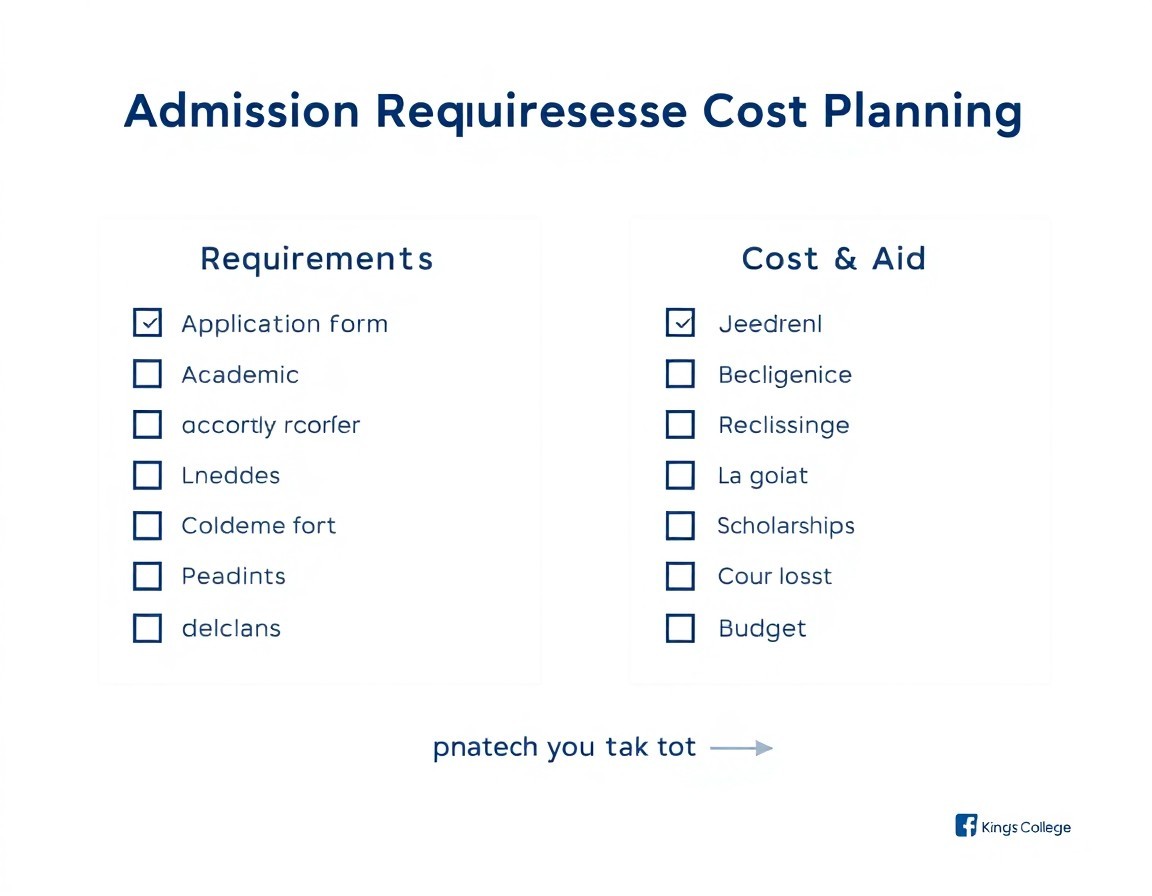
Apply by selecting the correct degree or FYP track, checking requirements, gathering documents, and confirming the relevant deadline. International applicants should also review funding, English testing, residence, and the institution code O19441088976 before submission.
Start with the University of King’s College website rather than a third-party summary. Your application may need transcripts, identity documents, English test results, references, a personal statement, or writing samples. Graduate and journalism applicants should verify every supplemental requirement.
- Select your intended FYP track or direct degree route.
- Read the entry requirements for your applicant category.
- Gather transcripts, test results, references, and required samples.
- Submit the application through the instructed process.
- Confirm receipt and track conditions, deadlines, and scholarship steps.
Ask admissions how FYP maps to your intended degree and whether transfer credits affect your timeline. If you attend a campus visit, ask about residence and meal plans, library and learning spaces, student support services, varsity sports participation, and academic advising.
Dal Online and My Dal may appear in the wider campus network, but they don’t replace King’s admissions instructions. Keeping those systems separate saves time, particularly for international students who may otherwise upload documents to the wrong place.
How do scholarships work at King’s?
King’s scholarships and bursaries depend on award type, applicant status, academic results, and timing. International applicants should review the specific award page, note the March 1 additional-application deadline, and contact [email protected] before assuming an award applies.
Does University of King’s College offer scholarships or bursaries? Yes, official information lists entrance scholarships, major awards, tuition waivers, and bursary information. The awards don’t all use the same process, so qualifying for an award and submitting the correct application are separate tasks.
Are there scholarships for international students at University of King’s College? Yes. The listed international awards include a tuition waiver of up to $12,000, general awards from $1,000 to $5,000, and major awards valued at $39,000 and $20,000. Check renewal conditions and eligible degree categories carefully.
Advice often says to apply after admission. That can work, but timing is the bigger risk. Some awards require separate action before March 1, and missing the upload or form deadline can matter more than a strong academic record.
Create one scholarship folder with transcripts, references, proof of enrolment, and matched statements. Check internal awards before external funding. When your application list is already long, this small bit of organization can prevent a last-minute scramble.
Why choose King’s for journalism, writing, and interdisciplinary study?
King’s suits students who want a broad first year followed by focused study in journalism, writing, humanities, science, or music. The strongest case rests on pathway fit and academic culture, not one ranking or a vague promise of campus life.
King’s combines FYP structure, writing practice, journalism pathways, Honours Programs, and interdisciplinary subjects. Students can connect interests such as Media Studies, Creative Writing, Contemporary Studies, and International Development Studies without treating the first major choice as permanent.
The institution also has cultural links to Halifax’s creative community. Names such as Ryan Hemsworth, Kathryn Borel, Rich Aucoin, Ben Caplan, and James Calbert Best appear in the wider King’s story, but alumni recognition shouldn’t replace checking curriculum, workload, and employment goals.
Campus life includes athletics and student teams connected with the Atlantic Colleges Athletic Association, theatre and music ensembles, and Nova Scotia campus life near central Halifax. For sports information, consult the official King’s athletics site.
The trade-off is scale. A smaller institution may offer closer academic contact, but it may not provide the same breadth of facilities or program volume as a large university. If you want maximum course choice, compare King’s with Dalhousie University before committing.
Ready to move? Confirm the current details on the official ukings.ca page.
Frequently Asked Questions
What’s University of King’s College?
It’s a separate university in Halifax, Nova Scotia, known for FYP, journalism, writing, humanities, science, and music pathways. It has academic connections with Dalhousie University.
Where is University of King’s College located?
King’s is located on Coburg Road in Halifax, Nova Scotia, Canada. Verify the campus location with the official map before planning a visit.
What university is King’s College London?
King’s College London is a separate university in the United Kingdom. It isn’t the Halifax institution and has different programs, fees, and admission rules.
When was University of King’s College founded?
King’s has a long university charter and history, but the supplied verified data doesn’t include an exact founding year. Check the institution’s official history page for the documented date.
What programs does University of King’s College offer?
Programs include Arts, Journalism, Science, Music, the One-Year Bachelor of Journalism, Master of Journalism, and MFA degrees in Creative Nonfiction and Fiction.
What’s the tuition cost at University of King’s College?
For international students, guaranteed tuition in 2026/27 is listed at $37,992 CAD per year, plus incidental fees and the international health plan fee. Program and residency differences matter.
What residence options are available at University of King’s College?
King’s offers residence applications with a $50 application fee and a $400 confirmation deposit for new applicants. Non-King’s residence space remains limited, with 5 to 15 students housed each year.
What are the admission requirements for University of King’s College?
Requirements vary by program and applicant category. Check academic prerequisites, transcripts, English language proficiency, and any portfolio or writing requirements for your chosen route.
What’s the acceptance rate for University of King’s College?
The supplied official data doesn’t provide a verified acceptance rate. Use program-specific entry requirements and contact admissions rather than relying on an unsourced percentage.
Conclusion
King’s makes the most sense for students who value a guided first year, strong writing or journalism preparation, and interdisciplinary study in Halifax. FYP can reduce the pressure of choosing a narrow major immediately, but it still demands careful planning. Confirm how your track leads to the degree you want.
Your next step is practical: open the official admissions and financial-aid pages, check the requirements for your applicant category, and build a budget using tuition, residence deposits, Halifax living costs, and scholarship deadlines. International applicants should contact admissions directly and verify the March 1 award deadline if an additional application applies.
Use rankings after you’ve checked fit. Compare curriculum, timeline, support, housing, funding, and the work required to reach your goal. King’s may be a strong match, but the evidence should come from your intended program, not the name alone.
Your next step: visit the official ukings.ca page to check or confirm the latest details, then start with the action that fits your situation.
Related guides
- Dalhousie University Admissions Rankings Nova Scotia
- Kingswood University Admissions Tuition Rankings
- Ambrose University Admissions Rankings Accreditation
Sources
- Education and training (Government of Canada)
- QS / TopUniversities rankings methodology
- Maclean’s University Rankings
- ukings.ca (official site)
- Library
- Consumer Financial Protection Bureau