Toronto Metropolitan University Admissions [2026 Guide]
Comparing Ontario campuses on a Monday night can get messy fast. Toronto Metropolitan University is a public university in downtown Toronto, Ontario, and this guide helps you sort out fit, costs, timing, rankings, and support without getting lost in the noise.
18 min read · 3,993 words
Table of Contents
Written by Muhammad Adnan Raza, Education Researcher, 8+ years of experience.
Author profile · Editorial guidelines · About us
What’s Toronto Metropolitan University?
TMU is a public university in downtown Toronto, Ontario, with more than 60 career-focused undergraduate degrees and 65+ graduate options. It used to be called Ryerson University, and its appeal comes from applied learning, city access, and a practical student experience.
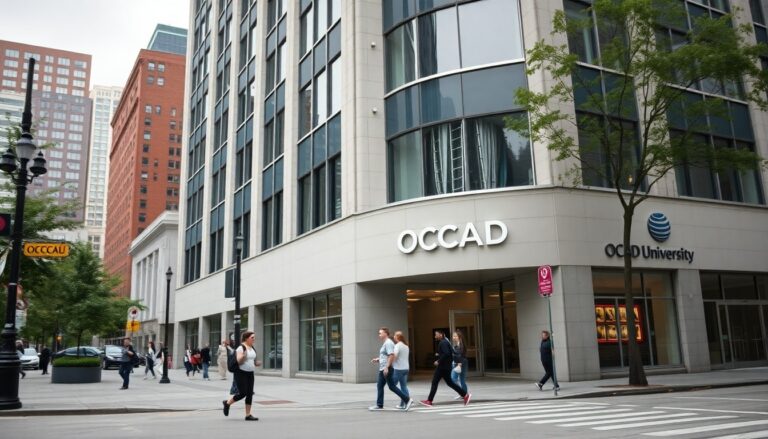
Toronto Metropolitan University sits in the middle of downtown Toronto, so the campus feels urban from day one. That matters. If you want quiet lawns and a slower pace, this isn’t that kind of place. And that’s exactly why some students choose it.
The university calls out 60+ career-focused undergraduate degrees and 65+ master’s degrees, PhDs or professional master’s diplomas on its official site, which tells you a lot about its scale. I’d read that as breadth with a job-facing edge, not as a prestige contest.
Why read this instead of jumping straight to the official pages? Because the university splits admissions, tuition, rankings, and student-life details across different pages. This guide pulls those pieces together so you can compare trade-offs quickly, especially if you’re deciding between Toronto options or trying to avoid deadline mistakes.
What was Toronto Metropolitan University called before?
It was called Ryerson University before the name change. That older name still shows up in forum posts, old articles, and some third-party listings, so don’t let it throw you off when you compare sources.
Where is Toronto Metropolitan University located?
TMU is located in downtown Toronto, Ontario, Canada, with the main campus centered around the downtown core. If you search for a Toronto university near transit and city jobs, that location is a big part of the value.
What does TMU specialize in?
TMU specializes in applied, career-linked education. Think business, engineering, health, design, media, and other degree programs that connect classroom work to practical experience. The University Toronto Guide is useful if you want to compare a more traditional campus model with TMU’s urban approach.
How big is the student community?
Size matters because it affects residence life, student services, and the number of academic pathways available. TMU’s official breadth suggests it can support many types of learners, but it also means you need to be disciplined about choosing the right program, not just the right name.
New to this topic? Start with University Toronto Guide.
Why students choose TMU in Ontario
Students choose TMU for its downtown location, career-focused programs, and support systems that make city-campus life workable. The part many guides miss is how residence, student services, and pathway options fit together for real decision-making.
Most guides say location matters. Sure. But the real issue is how location changes your week.
At TMU, commute time, housing choices, and access to internships can shape your day more than the lecture schedule does.
The university’s own site highlights student-facing support and an applied learning culture, and that combination matters to students who want more than lecture halls. If you care about practical exposure, TMU makes a solid case.
What most people miss when comparing TMU?
Competitors often mention rankings or admissions, but they don’t connect TMU’s Student Experience, downtown location, residence options, and pathway support into one decision. That connection matters because it affects your cost, commute, and how quickly you settle in.
What’s TMU known for?
TMU is known for experiential learning, student support, and a city-based campus that feels connected to Toronto Metropolitan University’s work and cultural life. It also has visible system pieces like Zone Learning, The Chang School, and program pathways that help different kinds of learners move forward.
What’s the honest trade-off?
TMU can be a strong fit for career-minded students, but downtown convenience may come with higher living costs and a faster pace than some Ontario alternatives. If you want quiet grounds and slower rhythms, you should say that out loud and compare carefully.
What’s TMU ranked in Canada?
I won’t guess at a ranking number here, because the wrong figure does real damage. Check the latest World University Rankings profile for TMU and the university’s own rankings page, then read the subject results alongside program fit and student support.
Ranking talk gets noisy fast. What actually matters here’s context. A single ranking number can’t tell you whether your degree matches your goals, whether you can afford Toronto, or whether the support services will help you through first year.
TMU shows up in international ranking systems such as World University Rankings, but applicants should read those results beside Ontario-specific sources like OUInfo. That combo gives you a better picture than social media chatter ever will.
How should students read rankings?
Look at overall reputation, subject performance, and fit separately. A school can sit lower on one list and still be the better choice for a specific program, especially if you value applied learning, support services, or a downtown placement network.
What’s Toronto Metropolitan University known for in reputation terms?
It’s known as a practical, urban university with a strong student-service profile. That doesn’t make it “better” for everyone. It makes it easier to justify for students who want direct career alignment and city access.
What’s acceptance really about?
I’m not going to invent an acceptance rate here. The popular third-party figure says 80%, but I’d treat that as a rough signal only and confirm the current program page before making any decision. Admission at TMU still depends on program, prerequisites, and supplemental items.
What programs does TMU offer?
TMU offers more than 60 undergraduate degrees and 65+ graduate credentials across business, engineering, health, creative arts, and applied fields. The key move is to check program-specific requirements, because TMU doesn’t use one admissions pattern for every course.
Program choice is where most applicants either get sharp or get sloppy. The university name matters less than the actual curriculum, delivery type, and entry rules. That’s why the EduRanked Toronto Metropolitan University Decision Framework starts with program fit before anything else.
I also like how TMU splits its system across academic units and pathway options. You’ll see named areas like the Toronto Metropolitan University International College and TMUIC, which matter for international applicants and transition programs.
EduRanked Toronto Metropolitan University Decision Framework?
- Pick the exact program and delivery type you want.
- Check admission requirements and deadlines for your applicant type.
- Price tuition, residence, food, and transit before you apply.
- Review student support access, including advising and transition help.
- Weigh rankings, reputation, and career value only after the basics.
The order matters. Most students flip it and start with ranking or tuition. That’s backwards.
- Business: Ted Rogers School of Management and commerce pathways.
- Creative: The Creative School, media, design, and image-based fields.
- STEM and health: engineering, computer science, public health, and nursing-related pathways.
- Pathways: TMUIC and transition programs for students who need a bridge into degree study.
What programs should you review first?
Start with business, engineering, computer science, nursing, and creative disciplines if you want broad labour-market appeal. If you’re comparing Ontario schools, you might also cross-check a second institution like York University Admissions Rankings to see where TMU feels stronger by subject.
What about continuing studies and short credentials?
TMU’s Explore programs page shows that the institution also supports learners who want certificates, professional development, or a different entry path. That’s useful if you’re not looking for a straight four-year route.
What should international applicants know about pathways?
TMUIC, UTP Stage I, UTP Stage II, and related transition options can matter more than the main brochure suggests. These aren’t generic add-ons. They can change your first year entirely, especially if you need foundation support before degree study.
What are the admission requirements for TMU?
Admission requirements vary by program, applicant type, and whether you need supplemental items like portfolios or interviews. For Ontario applicants, OUInfo lists non-academic requirements generally due by the Guaranteed Consideration Date, February 1.
TMU doesn’t run on one universal entry formula. That’s the mistake I see most often. Students ask, “What are the requirements?” as if one answer fits every faculty, but TMU admissions work by program and applicant category.
For Ontario applicants, OUInfo says non-academic requirements are generally due by the Guaranteed Consideration Date (February 1). That deadline matters because a missed portfolio or form can knock out an otherwise solid file.
What are the admission requirements for international students?
International applicants need to check entry requirements, English language proof, and any program-specific documents. TMU’s admissions pages and the official program page should come first. Immigration and study-permit issues belong on Canadian government pages, not rumor threads.
What are the admission requirements for nursing or computer science?
I won’t invent a specific average for TMU computer science or nursing here. Those programs can change by intake and applicant pool, so you need the current admissions page for the exact grade profile and prerequisite list. That’s the only safe move.
What documents should I prepare?
Transcripts, prerequisite proof, English test results if needed, and any supplemental items the program asks for. If you’re applying through a pathway, keep your foundation or transition documents together as well. Small clerical misses cause big delays.
How do I log in to the Toronto Metropolitan University student portal?
You use the official TMU login or student portal entry after you apply and receive access. I’d start from the main university site, then follow the admissions or student-services path rather than trusting bookmarked old links. Portal labels change more often than you’d expect.
How to apply to TMU
Apply by choosing the program, checking requirements, gathering documents, submitting the application, and watching supplemental deadlines. For fall entry, don’t drift past the February 1 non-academic deadline if your program needs extra material.
This is where good applicants stay organized and everyone else gets surprised. The application process isn’t hard, but it’s unforgiving. Miss one date, and you can lose consideration.
- Choose the exact program and intake you want.
- Read the admissions page and note every prerequisite and supplemental requirement.
- Collect transcripts, test results, and portfolio or interview items early.
- Submit the application and pay close attention to portal messages.
- Track the February 1 deadline for non-academic requirements if your program uses it.
What are the deadlines for TMU applications?
Deadlines vary by program and applicant type, but Ontario applicants should pay close attention to the February 1 Guaranteed Consideration Date for non-academic requirements. If you’re aiming for fall intake, build your timeline backward from that date, not forward from it.
What if I’m applying to a graduate program?
Graduate admissions can have separate document checks, reference requests, or faculty-level steps. TMU’s graduate catalog is broad, so I’d treat each department as its own process and avoid assuming undergraduate rules carry over.
What if I miss the deadline?
Don’t improvise. Check whether the program has a later intake, a pathway option, or a future cycle. If it doesn’t, move on quickly and save your energy for the next realistic deadline.
If you want a clean next step, start with the official TMU admissions pages, then compare the exact deadline on your program page before you submit anything.
Weighing your options? Compare them in Canadian University Admissions Checklist.
How much is tuition at TMU?
I won’t make up tuition for every degree, because TMU charges differ by program and student type. The official tuition page does give exact costs for some foundation and English-boost pathways, including CAD 37,499, CAD 16,900 to CAD 32,900, CAD 14,954, and CAD 9,895 for 2027 intakes.
Money questions need clean numbers, not vague comfort. TMU’s official tuition and fees page lists specific pathway pricing, and those figures are worth knowing if you’re comparing entry routes or transition options. Here’s what’s verified on the university site.
- CAD 37,499 for the Pre-ESL Foundation + ESL Foundation (2 terms) Program, winter 2027.
- CAD 16,900 to CAD 32,900 for the ESL Foundation Program, fall 2027.
- CAD 14,954 for the Pre-English Boost + English Boost Program, fall 2027.
- CAD 9,895 for the English Boost Program, fall 2027.
Those figures come from the official TMU tuition and fees page. For degree tuition, I’m not going to invent a number. Check the exact program page, because undergraduate programs and student categories don’t share one price tag.
Does TMU offer scholarships?
Yes. TMU lists scholarship support, including a CAD 10 million Entrance scholarship pool in the research set provided here. Scholarship conditions vary, so the award page matters more than any headline number.
What other costs should students expect?
Budget for residence or rent, meal plans, transit, books, and personal costs in Toronto Metropolitan University. Downtown living can add pressure fast, especially if you want a private room or a shorter commute.
Is TMU expensive?
It can be, depending on your living setup and program. The tuition number alone doesn’t tell the whole story. In downtown Toronto, housing and food can swing your total budget more than tuition does.
How much does residence cost?
The verified fact sheet gives a CAD 50 residence application fee. That’s not the total residence cost, so I won’t pretend it is. Check the residence pages for room and meal details before you budget.
Student life, residence, and support at TMU
TMU has residence, dining, and student services that make downtown life more manageable, not just more urban. The support network includes Student Success Navigators, ISS, PALS, AAS, the First-Year Science Office, and the First-Year Engineering Office.
This is where TMU feels different in practice. A commuter-school label misses too much. Yes, the campus sits in the city.
But residence, dining services, and support offices give students a fuller experience than people expect.
TMU’s student support list isn’t decorative. Student Success Navigators, ISS, PALS, AAS, The First-Year Science Office, and The First-Year Engineering Office all exist because first year can get messy fast.
Does Toronto Metropolitan University have residence?
Yes, TMU has residence options and first-year housing pathways. The university also charges a CAD 50 residence application fee, which gives you a practical starting point for planning. Check residence pages for room types, meal options, and availability.
What are the campus housing options for students?
Residence, private rentals, and commuter arrangements all show up in Toronto. If you want campus life, residence helps. If you want lower cost, you may need to commute and trade convenience for budget control. There’s no magic fix there.
What student services matter most?
Student Support Services, advising, transition help, and first-year offices matter most because they shorten the gap between confusion and action. That’s especially true for learners arriving from outside Ontario or from pathway programs.
What’s Zone Learning?
Zone Learning is one of TMU’s most recognizable applied-learning ideas. It connects students, startup activity, and practical projects. That can matter a lot if you want experience that looks and feels closer to work than to a purely theoretical classroom.
What do students miss most about campus life?
enough is how quickly downtown life can eat time. If you live off campus, a twenty-minute delay can snowball. If you live in residence, the rhythm gets easier, but your budget takes a different hit.
International students and pathways at TMU
International applicants should check English requirements, housing, and pathway options before they apply. TMUIC, The Chang School, and transition programs can be a smarter first step than direct entry for some students.
TMU’s international side is more layered than many applicants expect. That’s a good thing if you need support, but it also means you have to read carefully. Don’t assume direct degree entry is always the best route.
Toronto Metropolitan University International College and TMUIC matter because they can bridge foundation gaps and create a cleaner start. For some learners, that’s the difference between landing well and struggling through a too-ambitious first term.
Is Toronto Metropolitan University good for international students?
Yes, if you want a supported urban transition with pathway options and a large student-services structure. International students still need to budget for Toronto living costs and confirm study-permit details with official Canadian government sources.
What’s the acceptance rate at Toronto Metropolitan University?
I won’t pretend there’s a single official acceptance rate here. A third-party source cited in the fact sheet says 80%, but the safer approach is to treat that as approximate and verify the current program page before you decide anything.
How do pathway and foundation programs work?
TMU’s foundation and boost programs give students entry routes with different lengths and cost points. The fact sheet lists 2 terms, 8 weeks, 2 semesters, and 1 semester in the verified cost data, which tells you these pathways vary meaningfully.
What should international students check before applying?
Check admission requirements, English scores, housing options, and total cost. Then look at the application calendar. If you ignore one of those four pieces, your file can look fine on paper and still fail in practice.
For a second authority source, I’d pair TMU’s admissions page with the OUInfo university profile. That combination gives Ontario applicants a cleaner read than scattered third-party listicles.
How TMU compares with other Toronto Metropolitan universities
TMU competes best on fit, support, and city access, not on prestige theater. Compare it against another Toronto university by program, cost, services, and commute, then decide with your own needs in mind.
Most comparison articles flatten everything into “prestige.” That’s lazy. TMU and other Toronto schools serve different student types, and the right answer depends on how you learn, how you budget, and how much city life you want.
Here’s the blunt version: TMU’s downtown location gives it a different rhythm from a campus that feels more enclosed. If you want a broader research profile, you might also compare with the University of Toronto. If you want a more career-focused structure, TMU often makes the stronger practical case.
| University | Type | Location | Best for | Trade-off |
|---|---|---|---|---|
| Toronto Metropolitan University | Public university | Downtown Toronto | Applied learning, student services, career-focused study | Higher urban living costs and a faster pace |
| University of Toronto | Public university | Toronto | Research-heavy study and broad international reputation | More competitive, less career-practical by default for some applicants |
| York University | Public university | Toronto | Large program range and commuter flexibility | Different campus feel and transit pattern |
For a broader Ontario comparison, I’d use the York University Admissions Rankings page alongside TMU and then compare one more school if you need a real shortlist. Two schools are rarely enough.
How should you choose between them?
Use program fit, admission readiness, cost, student support, and career value in that order. EduRanked Toronto Metropolitan University Decision Framework, and it stops you from making a shiny but expensive mistake.
Myths vs facts about TMU
TMU is surrounded by old-name confusion, ranking obsession, and commuter-school myths. The cleanest way to judge it’s to separate image from reality and look at residence, requirements, and program-specific fit.
Myth 1: TMU is only a commuter school with limited campus life. Fact: TMU has residence, dining, student services, and downtown campus facilities that support a fuller student experience.
Myth 2: All TMU programs use the same admission requirements. Fact: Requirements vary by program, applicant type, and whether supplemental items like portfolios or interviews are needed.
Myth 3: A ranking number alone is enough to choose TMU. Fact: Applicants should weigh rankings alongside program strength, location, student support, and total cost.
The myth most people miss is the old-name confusion. Ryerson University still appears in older links and memory, but the current institution, services, and program setup are what matter now.
Ready to move? Confirm the current details on the official Toronto Metropolitan Universitymu.ca page.
Canadian University Admissions Checklist
Free one-page checklist for program fit, documents, budget, and deadlines.
Frequently Asked Questions
What’s Toronto Metropolitan University?
TMU is a public university in downtown Toronto, Ontario, Canada. It offers career-focused programs, student services, and applied learning across undergraduate and graduate study.
What was Toronto Metropolitan University called before?
It was previously called Ryerson University. The older name still appears in older sources, so it helps to know both when you compare information.
What’s Toronto Metropolitan University known for?
TMU is known for applied learning, student support, downtown Toronto access, and programs tied closely to career preparation. It also has visible pathway and zone-based innovation support.
What’s Toronto Metropolitan University ranked in Canada?
I’m not going to invent a ranking number. Check the latest World University Rankings profile and TMU’s own rankings pages, then compare subject performance with your intended program.
How much is tuition at Toronto Metropolitan University?
Tuition depends on the program and student type. The official TMU page lists verified pathway costs such as CAD 37,499, CAD 16,900 to CAD 32,900, CAD 14,954, and CAD 9,895 for selected 2027 programs.
How do I apply to Toronto Metropolitan University?
Choose your program, review requirements, gather documents, submit the application, and track any supplemental deadlines. For some Ontario applicants, the non-academic deadline is February 1.
Does Toronto Metropolitan University have residence?
Yes, TMU has residence options. The fact sheet also lists a CAD 50 residence application fee, so you should budget early and check room details on the residence page.
What are the admission requirements for Toronto Metropolitan University?
They vary by program, applicant type, and whether the course needs extra materials. Some programs need portfolios, interviews, or specific prerequisites, so check the exact page.
Is Toronto Metropolitan University good for international students?
Yes, especially if you want urban access, support services, and pathway options like TMUIC. You still need to confirm language, housing, and immigration details before you apply.
How do I log in to the Toronto Metropolitan University student portal?
Use the official TMU login path after you’ve applied or enrolled. Start from the main university site and follow the current student-services route, not old bookmarks.
Conclusion
Toronto Metropolitan University makes the most sense for students who want a practical degree, a downtown Toronto setting, and support they can actually use. I’d be cautious about choosing it for ranking bragging rights alone. That’s the wrong lens.
EduRanked Toronto Metropolitan University Decision Framework, check your exact program page, and line up requirements, tuition, and deadlines before you commit.
The next move is simple: confirm the official admissions details, compare TMU against one other Ontario university, and build your application checklist from there. If you want a faster planning aid, start with EduRanked’s admissions checklist and keep your documents, costs, and deadlines in one place.
Your next step: visit the official torontomu.ca page to check or confirm the latest details, then start with the action that fits your situation.