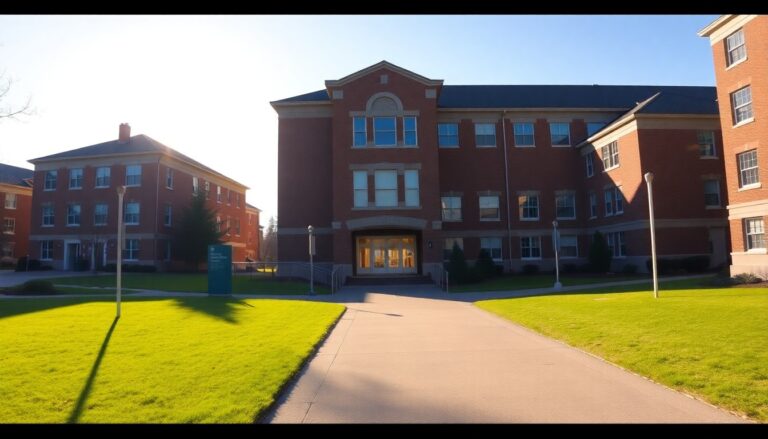
St. Thomas University Admissions and Rankings for New [2026]
If you’re comparing New Brunswick universities and keep getting conflicting numbers on acceptance rates, tuition, and program details, which source do you actually trust? St. Thomas University (STU) is a liberal arts and social sciences institution located at 51 Dineen Drive in Fredericton, New Brunswick, Canada, offering undergraduate programs with strong student support services, a reported 91% first-year teaching excellence rating, and financial aid access, and this guide puts the key admissions facts, cost figures, and ranking context in one place so you can make a real decision.
13 min read · 2,974 words
Table of Contents
Pricing note: After visiting, you’ll be eligible for a $4,000 Campus Visit Award once admitted to STU. (source). Confirm the latest figure on the official source before you decide.
If you haven’t already, our guide on universit de moncton universite admissions bourses covers the foundation that connects directly with what you’ll learn here.
For a closer look at this, see our guide on Yorkville University.
Written by EduRanked Editorial Team, Higher Education Research Editor, 10+ years of experience. Researched using STU’s official admissions pages, Studies Overseas institutional data, and the U.S. News and World Report university profile for St. Thomas University.
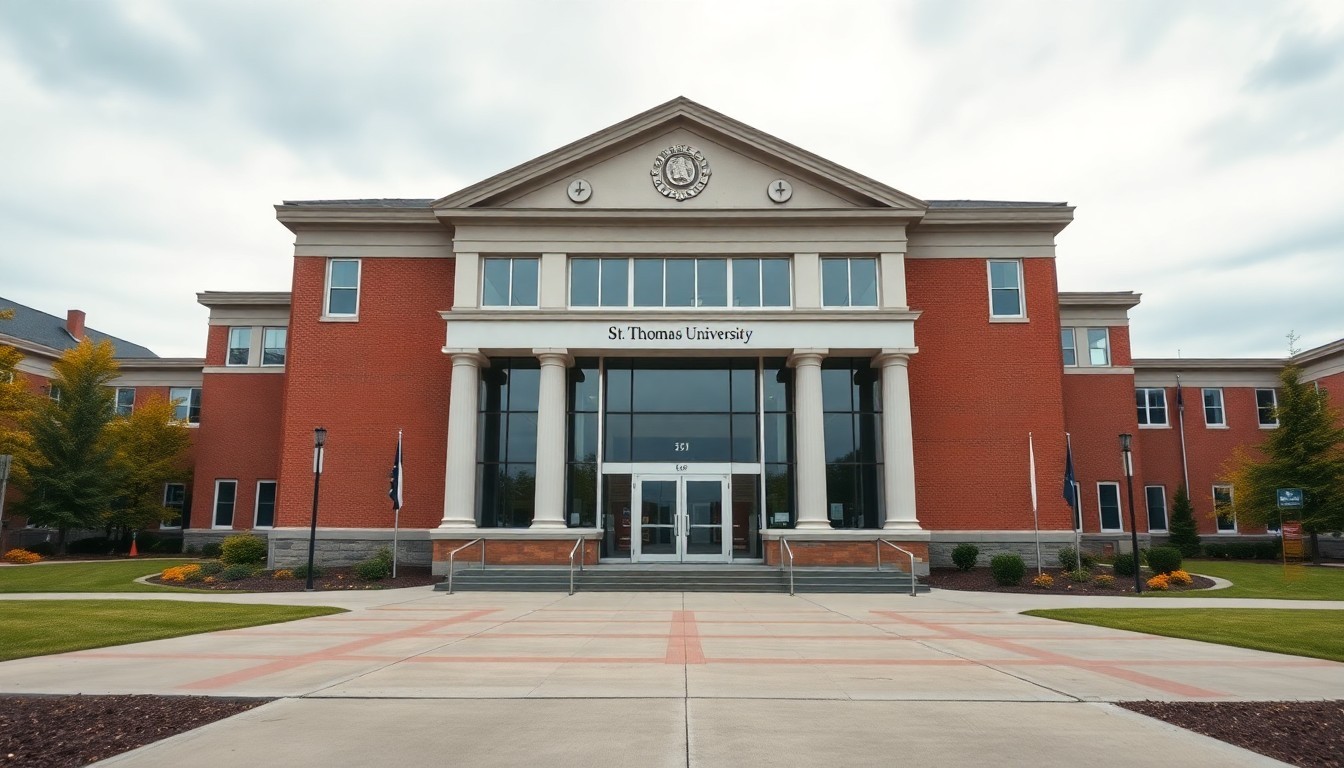
What’s St. Thomas University Known For?
STU is known for undergraduate liberal arts and social sciences education in Fredericton, New Brunswick. It reports a 91% first-year teaching excellence rating and delivers student support through the Writing Centre, Career Development Office, and Peer Tutoring programs.
STU’s identity is built around one idea: small, close-knit, undergraduate-focused learning. You won’t find a sprawling research university here. What you’ll find is faculty who actually know your name, a campus culture tied to social justice and liberal arts, and a tradition the institution says has run for over 100 years.
That 91% first-year teaching excellence figure (sourced from Edarabia’s STU profile) isn’t just a brochure number. It’s the kind of signal worth weighing when you’re choosing between a mid-size research university and a smaller institution. Research output matters less here.
Student experience matters more, and that distinction is real enough to drive your decision if you’re honest about what you actually want from four years of university.
Here’s what competitor guides consistently miss: STU’s fit isn’t about prestige rankings. It’s about whether you want a mentorship-heavy, humanities-grounded environment. If you’re chasing a STEM-heavy program or a large campus social scene, this probably isn’t your school. That’s worth naming plainly rather than burying in fine print.
What student support should you actually expect?
The services that make the biggest difference for first-year students are the Writing Centre (academic writing help), the Career Development Office, Peer Tutoring, and the Student Health Centre. These aren’t extras bolted onto the experience. They’re core to how STU structures undergraduate life, and they’re genuinely accessible rather than listed-but-hard-to-book.
If writing is a concern going in, start there. Ask admissions specifically about Writing Centre access before your first semester, not after your first assignment comes back marked up.
New to this topic? Start with university alberta admission tuition programs.
What Programs Does St. Thomas University Offer?
STU offers undergraduate liberal arts and social sciences degrees, with Bachelor of Arts pathways in areas including Human Rights, Journalism, Criminology, and more. Confirm program requirements directly on STU’s official pages before applying, as third-party summaries go out of date.
The Bachelor of Arts is the core degree. Common interest areas include Human Rights, Journalism, History, Mathematics, and Criminology and Criminal Justice. Third-party summaries sometimes list programs that have since changed names or restructured entry requirements, so always verify the current program structure on STU’s official site before building your application around a specific major.
STU also highlights community and mentorship through initiatives like the College of Law’s Palermo Mentorship Program, which focuses on civic education. That kind of program signals something real about institutional culture. Read through STU’s news and blog posts, not to collect brochure quotes, but to see whether the student life described there matches what you’re actually looking for day-to-day.
If you need scheduling flexibility, check whether Continuing Studies options line up with your timeline. Some pathways may support part-time or non-traditional entry, but you’ll need to confirm directly which programs allow Winter (January) intake for 2026 specifically.
For students researching Canadian university options more broadly, the University of Alberta admission, tuition, and programs guide offers a useful comparison point for a larger research-intensive institution.
How Do Admissions and 2026 Intakes Work?
STU offers Fall (September) and Winter (January) intakes. Key deadlines: June 1 for Fall international applications, October 1 for Winter. Indian students applying with CBSE, ISC, or CISCE credentials need a minimum 70% average in five academic courses.
For international applicants, Studies Overseas reports that the June 1 deadline is recommended for Fall entry to allow sufficient visa processing time. Winter entry applicants should target October 1. Don’t treat these as soft suggestions.
Visa timelines are real, and a missed window costs you an entire intake cycle, not just a few weeks.
Indian students specifically: you need a minimum 70% average in five academic courses on the India Senior School Certificate, awarded by CBSE, ISC, or CISCE Boards. That’s a concrete threshold, not a vague “competitive” standard that leaves you guessing.
What English language tests do international applicants need?
Accepted tests include IELTS, TOEFL, PTE, and DET. Specific score minimums depend on your program and country of origin. Don’t rely on third-party summaries for these numbers because they go out of date fast, and submitting the wrong score band can stall your application entirely. Go directly to STU’s admissions pages for current thresholds.
How do you apply step by step for 2026?
- Choose your program (limit to two options) and confirm whether it supports Fall (September) or Winter (January) 2026 entry on STU’s official admissions page.
- Gather your academic transcripts and, if required, your English language test scores (IELTS, TOEFL, PTE, or DET).
- If you’re an international applicant, start the Provincial Attestation Letter (PAL) process early. Document timing here can delay your entire application if left late.
- Submit your complete application through STU’s Apply pathway and save every confirmation email and screenshot.
- Build your total cost scenario (tuition plus Fredericton living) before you receive admission, not after, so you’re ready to confirm enrollment without scrambling for funding.

What Does Tuition and Total Cost Look Like in New Brunswick?
Your real cost at STU includes tuition, mandatory fees, and Fredericton living expenses. Scholarships like the Entrance Scholarship (Academic Excellence) and the Student Leaders Scholarship reduce cost but don’t replace a full budget. Build a total scenario before applying, not after.
Students consistently budget only tuition and ignore Fredericton living costs entirely. Housing, food, transit, and course materials add up fast, and the gap between “tuition budget” and “actual annual spend” catches people off guard mid-semester. Below is the cost framework you should build before you commit.
| Cost Category | Type | What to Confirm | Best For | Trade-off |
|---|---|---|---|---|
| Tuition and mandatory fees | Fixed per program | Check STU’s official tuition/fees page for your specific degree and student category | All students | Varies by program; international rates differ from domestic |
| On-campus accommodation (annual) | Fixed if you choose residence | Confirm what “annual accommodation” includes, meal plan assumptions vary | First-year students wanting campus access | Typically higher than off-campus renting; less flexibility |
| Off-campus housing | Variable | Research Fredericton rental market independently | Students prioritizing cost control | Requires more self-management; commuting adds time |
| Food and essentials | Variable | Budget realistically for Fredericton grocery and dining costs | All students | Easy to underestimate without a monthly spending plan |
| Transit and local transport | Low-to-moderate | Confirm Fredericton Transit pass options for students | Off-campus students | Fredericton isn’t a dense transit city; factor in walking or cycling |
| Course materials and misc. | Variable | Ask your faculty department for typical materials costs per semester | All students | Often overlooked in initial budget planning |
On scholarships: STU offers Entrance Scholarships (Academic Excellence) and Student Leaders Scholarships. Both are worth applying for, but treat them as cost-reducers, not cost-eliminators. Awards are often conditional on maintaining a minimum academic standing, so factor renewal conditions into your multi-year budget, not just year one.
A scholarship that disappears after a rough second semester isn’t a funding plan.
For a comparable small-university cost profile, the Canadian Mennonite University admissions and tuition guide is worth reviewing alongside STU’s figures.
How Does STU’s Ranking and Reputation Compare to Other New Brunswick Universities?
STU’s ranking position reflects its liberal arts focus rather than research output. Compare it on student support quality, program fit, and intake flexibility, not just an overall score. Teaching quality metrics matter more here than research citation counts.
Listing a position number without context isn’t useful. Rankings that weight research citations heavily will make STU look weaker than it should for someone who actually wants a teaching-focused undergraduate experience. Methodology matters, and you should check how any ranking calculates its scores before treating the number as meaningful for your situation.
The EduRanked STU Decision Framework uses five criteria in order:
- Program fit: Does STU offer your exact degree interest with a course structure you can commit to for three or four years?
- Teaching quality signal: STU’s 91% first-year teaching excellence rating is a concrete data point. Ask any competing institution for an equivalent metric before comparing.
- Total cost scenario: Tuition plus Fredericton living versus your available funding. Run both on-campus and off-campus scenarios.
- Intake flexibility: Can you enter Fall or Winter? Does your specific program support both? This matters if your documents or visa timeline runs long.
- Support services access: Writing Centre, Career Development Office, Peer Tutoring, are these genuinely available to your program cohort, or listed but hard to book?
Research output metrics (publications, citation counts) are simply less relevant for STU than for a research-intensive university. That’s not a weakness, it’s a structural difference that reflects a deliberate institutional choice. If you want faculty who publish less and teach more, that trade-off works in your favour.
If you want a research environment with lab access and graduate pathways, it doesn’t.
For a broader comparison of Canadian university admissions structures, the University of Lethbridge admissions, rankings, and programs guide gives you a useful second data point.
Weighing your options? Compare them in university lethbridge admissions rankings programs.
What Most Applicants Get Wrong About STU Admissions and Costs
Three persistent myths trip up applicants: treating a single acceptance rate number as predictive, assuming scholarships cover full costs, and expecting career outcomes to happen without active engagement. Each one has a concrete fix.
Myth 1: There’s a single acceptance rate number that predicts your chances.
Myth: If you find a published acceptance rate for STU, that number tells you whether you’ll get in.
Fact: Acceptance outcomes depend on your specific program, intake cycle, and documentation quality. If STU doesn’t publish a current official rate, using a third-party estimate as your decision anchor is unreliable. Focus on whether you meet the stated entry requirements for your program, that’s the actual filter, and it’s one you can act on.
Myth 2: Scholarships cover most or all of your costs.
Myth: Getting an Entrance Scholarship means tuition is handled.
Fact: Scholarships reduce cost. They don’t eliminate it. And most are conditional, you need to maintain a minimum GPA to renew them year over year.
Build a budget that works without the scholarship, then treat the award as a buffer. That’s the financially safe approach, and it’s the one that doesn’t leave you scrambling in second year.
Myth 3: Career support and internship opportunities happen automatically.
Myth: Enroll, graduate, and employers find you.
Fact: Career readiness at STU requires active engagement. Use the Career Development Office early, explore STUworks International for work opportunities, and connect through platforms like Handshake and LinkedIn. The tools exist, but waiting until third year to use them is a common and avoidable mistake. Start in first semester.
How Do You Apply, Visit Campus, and Take the Next Step?
Move from research to application by confirming your intake, compiling documents, and visiting or virtually touring the Fredericton campus. STU’s admissions office is reachable at 1 (800) 367-9010, and the campus address is 51 Dineen Drive, Fredericton, New Brunswick.
You’re ready to act when you can answer three questions: Which program? Which intake (Fall or Winter 2026)? And what’s my total cost scenario?
If any of those three is still unclear, go back to the relevant sections above before touching the application form.
STU’s physical address is 51 Dineen Drive, Fredericton, New Brunswick. Fredericton International Airport is the closest major airport if you’re traveling to visit. A campus visit is genuinely worth it if you’re on the fence, because the in-person feel of a small liberal arts campus either clicks or it doesn’t, and no virtual tour fully replicates that.
STU does offer a virtual tour option. Use it as a first pass, not a substitute for visiting if you’re seriously considering enrolling. Pay attention to study spaces, support office locations, and residence options when you browse.
Contact admissions directly at 1 (800) 367-9010. Ask your three prepared questions about program, intake, and scholarship eligibility, and get the answers in writing.

Frequently Asked Questions
What’s St. Thomas University known for?
STU is known for undergraduate liberal arts and social sciences education in Fredericton, New Brunswick. It reports a 91% first-year teaching excellence rating and supports students through the Writing Centre, Career Development Office, and Peer Tutoring programs.
What’s St. Thomas University?
An undergraduate-focused institution at 51 Dineen Drive, Fredericton, New Brunswick, Canada. STU offers liberal arts and social sciences degree programs with strong student support services and a community built around mentorship and academic development.
What’s St. Thomas University’s acceptance rate?
STU doesn’t publish a single official acceptance rate. Your outcome depends on your specific program, intake cycle, and documentation. Use STU’s official entry requirements for your degree as the actual benchmark, not a third-party estimate.
What’s St. Thomas University’s tuition?
Tuition varies by program and student category (domestic versus international). Check STU’s official tuition and fees page for your specific degree, and build a total budget that includes mandatory fees and Fredericton living costs, not tuition alone.
What are St. Thomas University’s colors and mascot?
STU’s colors are maroon and gold. The Tommies is the name associated with STU’s athletic identity. Confirm current branding details on STU’s official site, as institutional branding occasionally updates.
What athletic division is St. Thomas University in?
STU competes in U Sports (formerly Canadian Interuniversity Sport), the governing body for Canadian university athletics. This is distinct from NCAA divisions, which apply to U.S. Institutions.
When does St. Thomas University start for 2026?
STU offers Fall intake (September) and Winter intake (January). International applicants should target June 1 for Fall entry and October 1 for Winter entry to allow sufficient visa processing time. Confirm exact start dates on STU’s admissions pages.
Does St. Thomas University offer scholarships for 2026?
Yes. STU lists Entrance Scholarships (Academic Excellence) and Student Leaders Scholarships among its funding options. Confirm eligibility criteria and renewal conditions on STU’s official scholarship pages before counting an award in your budget.
Final Word
St. Thomas University in Fredericton is a strong fit for a specific type of student: someone who wants undergraduate-focused teaching, close faculty mentorship, and a liberal arts and social sciences foundation.
The 91% first-year teaching excellence rating is real, and the support infrastructure (Writing Centre, Career Development Office, Peer Tutoring) is genuinely accessible. But it’s not the right school for everyone. If research output, a large campus social life, or STEM depth are your priorities, look elsewhere and own that decision rather than hoping STU will grow into something it’s not designed to be.
Your concrete next step: apply the EduRanked STU Decision Framework from the rankings section above. Confirm your program, your intake (Fall or Winter 2026), and your total cost scenario including Fredericton living. Then contact admissions at 1 (800) 367-9010 with your three prepared questions before you submit anything.
And don’t wait on the scholarship question. Entrance Scholarships and Student Leaders Scholarships have eligibility conditions, find out now whether you qualify, so you can plan your funding gap accurately before enrollment, not after you’ve already committed.
Ready to move? Confirm the current details on the official stu.edu page.
Conclusion
If you only take one thing from St. Thomas University: use this page to decide what matters for your situation, then check primary sources for anything that can change. Then take the next concrete step on the official stu.edu page.
Prices, requirements, and product details shift — confirm the facts that affect your choice, then move.
Sources
- STU Admissions — Official Admissions Page (St. Thomas University)
- St. Thomas University Profile and Rankings (U.S. News and World Report)
- EducationPlannerBC (official BC planning)
- With a wide array of programs available, international applicants are encouraged
- Address: 51 Dineen Drive Fredericton – New Brunswick, Canada (Map) × St.
- STU’s official site